Trying to conceive

At COPE, we’re here for you from the very beginning. Access trusted guidance, expert information, and compassionate support as you navigate the journey of trying to conceive.

Coping with loss

Coping with loss is deeply personal and painful — COPE offers gentle support, guidance, and understanding to help you navigate this difficult time.

Pregnancy

Navigate your pregnancy with confidence using COPE’s expert advice, emotional support, and reliable information tailored for every step of the journey.

Birth

Providing you with evidence based information to help prepare and nurture yourself before, during and following birth

New parents

Early parenthood can be joyful, challenging and everything in between. COPE provides you with expert guidance and real insights to help you feel seen and supported every step of the way.

Family, Friends & Community

Whether you're a partner, friend, or family member, COPE provides guidance and support to help you care for your loved one and yourself through every stage of parenthood.

Workplace support

COPE provides guidance and resources to help workplaces support the emotional wellbeing of expecting and new parents with care and understanding.

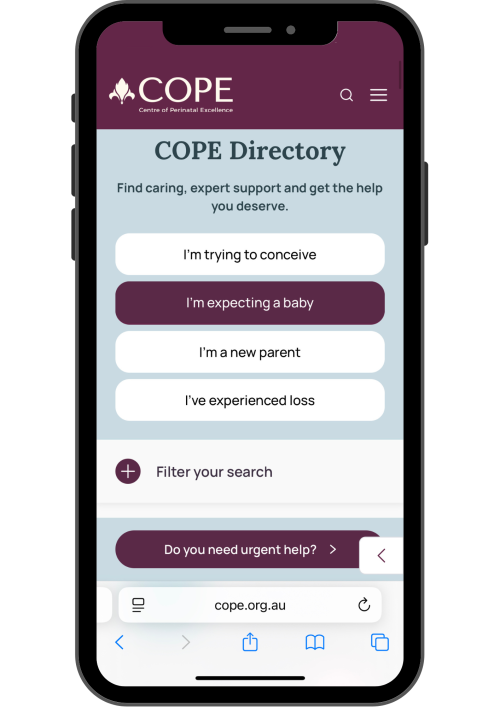
COPE Directory

If you're going through a tough time, you're not alone. The COPE Directory is a supportive first step toward finding the right help, close to home and tailored to your needs

About us

At COPE, we believe every parent deserves access to compassionate support and reliable information. Our mission is to raise awareness, reduce stigma, and empower families facing perinatal mental health challenges.

Get involved

Your support can make a lasting impact. By donating to COPE, you help to provide vital support, resources, and research for families facing perinatal mental health challenges. Together, we can make sure no parent is alone.

Getting help

Understand when to seek help, how to take the first step of talking to someone, types of support available, plus how to find specialised perinatal mental health support near you.

While feeling a certain amount of anxiety around giving birth is normal, for some women, the fear can be far more debilitating. It can even lead to delaying or avoiding pregnancy altogether.

Types of tokophobia

Tokophobia, or fear of pregnancy/childbirth, is rare and typically divided into two different types: primary and secondary.

Primary tokophobia

Primary tokophobia usually develops during childhood or adolescence and refers to a fear of pregnancy/childbirth in those with no first-hand experience of it. It can also be related to sexual abuse.

I have an aversion to seeing childbirth, and a reluctance to talk about it. I’m triggered by just the image of a woman in labour, even if I know it’s staged.

Secondary tokophobia

In contrast, secondary tokophobia develops following a traumatic pregnancy or delivery. It can also occur after miscarriage, stillbirth, or termination of pregnancy.

"I’m disgusted by being pregnant and terrified of giving birth. I’ve been pregnant before, more than once, and it felt like being invaded by a destructive alien force."

How common is tokophobia?

While research into tokophobia is limited, some studies estimate that it affects between 2.5 to 14 per cent of women. Women who experience tokophobia are more likely to have anxiety, depression or other mental health problems

"Because I’m older, I have so many girlfriends who have had babies and they all told me their stories. Every woman likes to tell their birth story, even if it’s really bad. There is a huge focus on the stuff that goes wrong."

Many women who experience tokophobia will opt for a c-section. However, some find the condition so paralysing they avoid sexual contact completely, will terminate a wanted pregnancy or pursue adoption.

Other consequences of tokophobia

Other consequences of tokophobia can include:

  • Anxiety
  • Insomnia
  • Sleeplessness
  • Eating disorders
  • Antenatal depression
  • Increased risk of postnatal depression

Support for tokophobia

It’s important to know that if this information resonates with you, you’re not alone. Help is available.

Many women find that being supported by a multi-disciplinary team, including their GP, midwife or obstetrician, social worker, psychologist and/or psychiatrist can help before or during pregnancy.

This can include discussing a previously traumatic birth experience, receiving information about labour and birth, visiting the maternity ward and meeting with health professionals or connecting with other women also experiencing the same condition.

Help and support for Tokophobia

 Find a skilled health professional near you via the COPE Directory

Search now
COPE Directory Smartphone Expecting
Be safe online
Dismiss Alert

Click the Exit Site button or press "Esc" on your keyboard to exit this site quickly. Click here to learn how to keep your identity safe online.

Quick exit
Hide