Parenthood is a steep learning curve, so it's important to manage your stress levels.
Mental health conditions in dads and partners
Fathers and partners may also be at risk of experiencing mental health condition after welcoming a baby.

For many new fathers or non-birthing partners, the demands of having a baby can be a shock. You're adjusting to your new identity and role, supporting your partner as they recover from the birth, feeling an increased sense of responsibility and coping with sleep deprivation.
It's common to feel overwhelmed and out of your depth at times, particularly in the early weeks and months.
I knew it was going to be challenging, but this was not the experience we had signed up for.
Our free and anonymous Stress Self-Check includes questions that are designed to explore whether you may be currently experiencing any symptoms of stress.
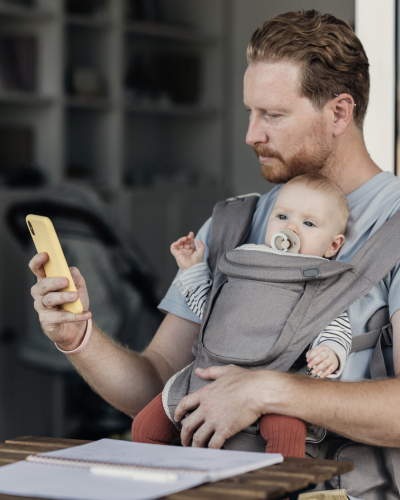
Below are some strategies that may be helpful to keep your stress levels down as you get used to being a dad or parent.
In the early days of parenthood when the focus is often on the mother and the baby, many dads and partners report feeling left out or like a third wheel. This is particularly the case if your partner is breastfeeding. Many men find it difficult to be open and honest about how they're feeling or adjusting and say they often feel "invisible" or ignored by health professionals.
While you might find that some of your friendships will change after having a baby, talking about your experiences with friends and workmates who've been through it, can be helpful. As you'll discover, there are positive and challenging aspects about becoming a dad - and you're not alone in finding it both rewarding and tough at times.
While having a baby means you'll have less free time, (at least for a little while), it can be helpful to prioritise some hobbies or activities you've always enjoyed. You might not be able to go to the gym or see your mates as frequently in the early stages of parenthood but making time for yourself outside work and parenting is important.
Sometimes it will be important to ask yourself - does this really matter? Putting unnecessary pressure on yourself can increase stress levels during an already vulnerable time. Keeping things in perspective is key, even if it's often easier said than done.
Having a baby places women at risk of developing depression and anxiety – more-so than at any other stage in their lives. That's why it's so important for both you and your partner to learn what to look out for. It's important to seek help as early as possible, so be proactive about learning more about these conditions and taking the steps to getting help.
If you’re concerned your partner may be suffering or you've noticed changes in her behaviour, talk to her about how she's feeling, and ask her what would help her cope. This might include practical things like helping her prioritise sleep, going to a GP appointment with her, or taking on more caregiving responsibilities if you have older children. Sometimes, simply listening to how she's finding motherhood and what she's struggling with most, can make a big difference.
Becoming a father can bring meaning, purpose and joy. But it's also a time of considerable change and adjustment. Many dads find that not being able to exercise as often, not eating as well and dealing with sleep-deprivation can take a toll on their physical and mental wellbeing.
It's important to check-in with yourself regularly to monitor how you're travelling.
Being aware of the signs and symptoms of mental health conditions that commonly occur during pregnancy and after birth, will mean you can seek help early if you need it. The faster you seek help, the faster you and/or your partner can recover.
Many couples are surprised by just how much their relationship changes after welcoming a baby. In the early weeks and months your partner’s focus and attention will be directed towards meeting the needs of your new baby. She may also feel exhausted and "touched out" as she adjusts to motherhood.
It's important to try to spend time as a couple where you can, to nurture your relationship and to reinforce that you're a team. When your baby is sleeping, make time to connect with your partner, reflect on how things are going for both of you and how you can best support one another.
Fathers and partners may also be at risk of experiencing mental health condition after welcoming a baby.
Depression in fathers is common, affecting up to one in ten dads - but help is available.
Having a new baby is a time of significant change and adjustment - and can bring moments of stress and anxiety.

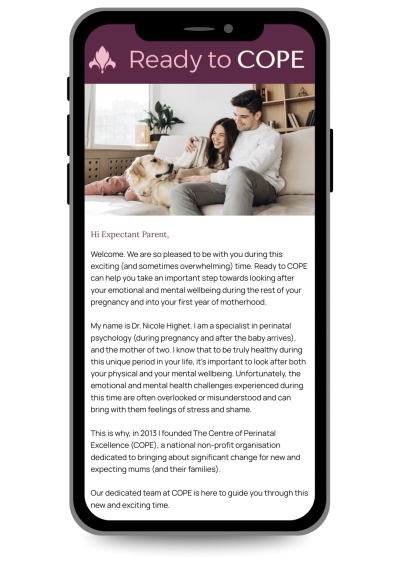
Now is a great time to sign up to our free guide, Ready to COPE.
Ready to COPE provides dads and non-birthing partners with supportive weekly updates about your emotional health and mental wellbeing throughout your partner's pregnancy and your first year of parenthood.
Becoming a parent is a significant transition with changes in all aspects of your life.
Whether struggling or managing well with a new addition to your family, there are a range of ways you can support your partner.
For many fathers, the birth of their baby marks the official 'beginning' of fatherhood - when reality really hits and you see the impact on your life.
Fathers and partners may also be at risk of experiencing mental health condition after welcoming a baby.
Getting help early is very important for you and/or your partner if things seem to be getting stressful.
If you are concerned about your partner, feel they are not coping, here are a some strategies for helping your partner get the support and help they need.
Click the Exit Site button or press "Esc" on your keyboard to exit this site quickly. Click here to learn how to keep your identity safe online.
