Trying to conceive

At COPE, we’re here for you from the very beginning. Access trusted guidance, expert information, and compassionate support as you navigate the journey of trying to conceive.

Coping with loss

Coping with loss is deeply personal and painful — COPE offers gentle support, guidance, and understanding to help you navigate this difficult time.

Pregnancy

Navigate your pregnancy with confidence using COPE’s expert advice, emotional support, and reliable information tailored for every step of the journey.

Birth

Providing you with evidence based information to help prepare and nurture yourself before, during and following birth

New parents

Early parenthood can be joyful, challenging and everything in between. COPE provides you with expert guidance and real insights to help you feel seen and supported every step of the way.

Family, Friends & Community

Whether you're a partner, friend, or family member, COPE provides guidance and support to help you care for your loved one and yourself through every stage of parenthood.

Workplace support

COPE provides guidance and resources to help workplaces support the emotional wellbeing of expecting and new parents with care and understanding.

COPE Directory

If you're going through a tough time, you're not alone. The COPE Directory is a supportive first step toward finding the right help, close to home and tailored to your needs

About us

At COPE, we believe every parent deserves access to compassionate support and reliable information. Our mission is to raise awareness, reduce stigma, and empower families facing perinatal mental health challenges.

Get involved

Your support can make a lasting impact. By donating to COPE, you help to provide vital support, resources, and research for families facing perinatal mental health challenges. Together, we can make sure no parent is alone.

Getting help

Understand when to seek help, how to take the first step of talking to someone, types of support available, plus how to find specialised perinatal mental health support near you.

The impact of stillbirth

In Australia, six babies are stillborn every day, with one in 120 births being a stillborn baby or a newborn death. These are utterly heartbreaking and tragic statistics, which impact thousands of families each year. 

Finding out when you are well into your pregnancy that your baby has not survived, or that there are problems with the unborn child or pregnancy, can be devastating. This commonly leads women and men to experience a range of reactions.

Common feelings and reactions

Initially, many people describe feeling in a state of shock, as they learn that their baby, whom they assumed to be healthy, is now at risk or has died.  The news that this has occurred leaves many in a state of disbelief or denial – as they cannot quite believe that this is happening or has happened to them. For others, there is an immediate feeling of immense pain.

It took a while for it to sink in.  I was shocked and filled with so much emotional pain that it was almost unbearable.

Many people also describe feeling angry that this has happened to them. These feelings of anger may be strong from the early days or linger over time as you are reminded of your loss.

"I felt really, really angry.  Angry with people who were pregnant, angry with people whose babies hadn’t been stillborn, angry with people who tried to empathise by talking to me about their miscarriages, angry even with those who were just trying to help."

Coming to terms with the news can also lead parents to feel immense and overwhelming feelings of sadness. It’s important to allow yourselves the opportunity to grieve, cry and mourn the loss of your child.  The loss of a baby can also leave you feeling very alone and isolated as an individual and a couple. Therefore, it’s important to keep talking to each other, and derive all the support you can from one another and from loved ones.

Many bereaved couples also say that the stigma of stillbirth can compound feelings of isolation. This can make it difficult to talk to others who simply don’t understand what they’re going through.

We both felt quite alone as this was happening to us but no one around us really knew what it was like to go through.  On the outside, we tried to make it seem like we were moving on, but on the inside it was raw.  It was a really difficult time for both of us.

Talking with others whom you feel that you can trust and who can be understanding and supportive, can also be incredibly helpful if you are experiencing coping with a stillbirth. Connect with families who have had similar experiences through support services such as Red Nose or Pink Elephants. This can help you realise that you are not alone and that others have been through a similar experience.

One of the greatest comforts to me over these last excruciating months was learning how many other women felt the same fear that I do and yet survived subsequent pregnancies.

It is also common to feel a range of other reactions. This can include guilt, anguish, jealousy and/or shame.  If you are experiencing these feelings, it is important to remember that it is not your fault. The reasons for this occurring are beyond your control.

It is a natural response to question, Why?  Why me?  Why us?  While it is perfectly normal to ask this, there is, however, no natural answer or explanation. In fact, in Australia, around 40 per cent of stillbirths that occur after 28 weeks’ gestation are unexplained. 

Try not to place pressure on yourself to find an explanation that may not be forthcoming. Rather, try to embrace your feelings of grief and draw on each other (or others that you trust) to hold and support you at this difficult time.

Learn more about support for grief and loss

Coping after a stillbirth – things that may help

Acknowledge your loss

It is important to acknowledge and allow yourselves time and space to grieve for the loss of your baby and all the hopes and dreams that you held for your child and your future as parents of your little one. 

Many parents talk of the importance of holding their stillborn babies.

"That moment when I held him in my arms, he was perfect.  It was the most precious, wonderful and sad moment of my life." 

Some have photographs taken to remember and cherish the moments that they had with them.

"I wish I had got more photos taken of her by an organisation such as Heartfelt – I never knew how precious the few I have now would be."

Give yourself time

Try to give yourself time to grieve before considering trying again for another baby in the future. This is important for your emotional and mental health, both now and in the future.  You or your partner may feel a sense of urgency to try to conceive again as soon as possible. However, often rushing into this can increase your anxiety later on.

"After my child was stillborn, I was desperate to get pregnant as soon as we could.  Becoming pregnant again was my sole focus.  And when I did become pregnant again, initially I felt immense relief… but that was soon replaced with feelings of apprehension, as I got through the next eight months holding my breath hoping everything would be ok."

Increased risk of anxiety and depression following a stillbirth

Research indicates that rates of anxiety in women during a subsequent pregnancy are likely to be higher if she falls pregnant within twelve months of a stillbirth.  Further, there is also more likelihood of experiencing postnatal depression and anxiety following the birth of their subsequent healthy baby.

As a result, some health professionals recommend giving yourself time (around a year) to mourn your loss before beginning another pregnancy. Doing so may be advantageous to your emotional and mental wellbeing in the longer term.

Learn more about anxiety and depression

Access professional and peer support

There are a range of professionals and services with expertise in providing support for coping with a stillbirth.

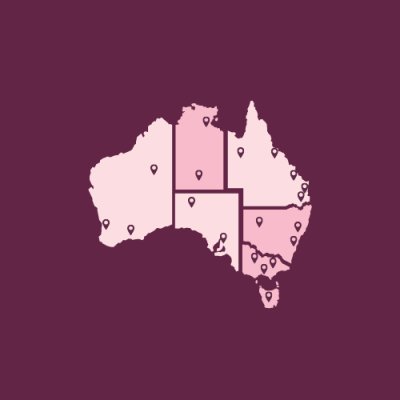
You can find a service in your area by searching under perinatal loss on the COPE Directory. 

Find help and support on the COPE Directory

Your postcode
COPE Directory Map Support Block

Other topics on coping with loss

Be safe online
Dismiss Alert

Click the Exit Site button or press "Esc" on your keyboard to exit this site quickly. Click here to learn how to keep your identity safe online.

Quick exit
Hide