Trying to conceive

At COPE, we’re here for you from the very beginning. Access trusted guidance, expert information, and compassionate support as you navigate the journey of trying to conceive.

Coping with loss

Coping with loss is deeply personal and painful — COPE offers gentle support, guidance, and understanding to help you navigate this difficult time.

Pregnancy

Navigate your pregnancy with confidence using COPE’s expert advice, emotional support, and reliable information tailored for every step of the journey.

Birth

Providing you with evidence based information to help prepare and nurture yourself before, during and following birth

New parents

Early parenthood can be joyful, challenging and everything in between. COPE provides you with expert guidance and real insights to help you feel seen and supported every step of the way.

Family, Friends & Community

Whether you're a partner, friend, or family member, COPE provides guidance and support to help you care for your loved one and yourself through every stage of parenthood.

Workplace support

COPE provides guidance and resources to help workplaces support the emotional wellbeing of expecting and new parents with care and understanding.

COPE Directory

If you're going through a tough time, you're not alone. The COPE Directory is a supportive first step toward finding the right help, close to home and tailored to your needs

About us

At COPE, we believe every parent deserves access to compassionate support and reliable information. Our mission is to raise awareness, reduce stigma, and empower families facing perinatal mental health challenges.

Get involved

Your support can make a lasting impact. By donating to COPE, you help to provide vital support, resources, and research for families facing perinatal mental health challenges. Together, we can make sure no parent is alone.

Getting help

Understand when to seek help, how to take the first step of talking to someone, types of support available, plus how to find specialised perinatal mental health support near you.

Recovery following a c-section

In the early days following birth, women may experience a temporary condition commonly known as 'the baby blues' which can leave them feeling very distressed and/or emotional. 

If your partner had a caesarean section or C-section, recovery after the birth may take little longer. Here are some helpful tips to support your partner after a C-Section.

Offer lots of practical support

This is major abdominal surgery, and your partner will need a lot of physical rest and as little as possible physical strain in the weeks following birth. 

You can help her by taking over household duties, bringing her the baby for feedings, encouraging her to walk and gently exercise, and enlisting help from family and friends.

Reassure your partner

If you were not planning to have a c-section, this can leave some women feeling disappointed or a sense of failure at not having given birth as she had hoped or planned. Your partner will need support and reassurance.

She really needs to know that no one could have done more, or been stronger or braver than her; that she didn’t give in to the pain too soon; that she tried everything she could have to jump-start a stalled labour; that another few hours of labour may not have done anyone any good; and that the decision made was the best one - both for the baby and for herself.

Give her praise and comfort

Some of the things you tell her may seem obvious to you, but it is very important that you are the person to say them. If you were there with her at the birth, you know better than anyone else exactly what she went through. Being comforted and praised by you will mean a lot more to her than hearing the same words from a well-meaning relative or a medical professional.

Give your partner the opportunity to talk about her experiences and validate her feelings

Listening and encouraging your partner to talk can help her to mentally process what happened and create for herself a sensible story out of a scary and potentially traumatic event. 

Avoid saying things such as, “You shouldn’t feel that way,” or “It didn’t happen like that.” Listening and acknowledging her feelings and perspective is important to allow her to feel heard and understood and move forward with the next stage in her parenting journey. 

Stay informed and feel reassured

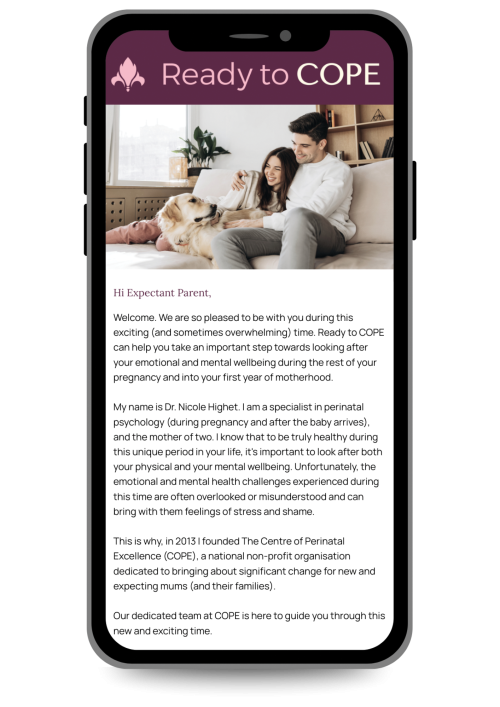
Now is a great time to sign up to our free guide, Ready to COPE.

Ready to COPE provides you with supportive weekly updates throughout your pregnancy and the first 12 months of parenthood.

Sign up now
Ready to COPE guide pregnancy and first year of parenthood
Be safe online
Dismiss Alert

Click the Exit Site button or press "Esc" on your keyboard to exit this site quickly. Click here to learn how to keep your identity safe online.

Quick exit
Hide