Trying to conceive

At COPE, we’re here for you from the very beginning. Access trusted guidance, expert information, and compassionate support as you navigate the journey of trying to conceive.

Coping with loss

Coping with loss is deeply personal and painful — COPE offers gentle support, guidance, and understanding to help you navigate this difficult time.

Pregnancy

Navigate your pregnancy with confidence using COPE’s expert advice, emotional support, and reliable information tailored for every step of the journey.

Birth

Providing you with evidence based information to help prepare and nurture yourself before, during and following birth

New parents

Early parenthood can be joyful, challenging and everything in between. COPE provides you with expert guidance and real insights to help you feel seen and supported every step of the way.

Family, Friends & Community

Whether you're a partner, friend, or family member, COPE provides guidance and support to help you care for your loved one and yourself through every stage of parenthood.

Workplace support

COPE provides guidance and resources to help workplaces support the emotional wellbeing of expecting and new parents with care and understanding.

COPE Directory

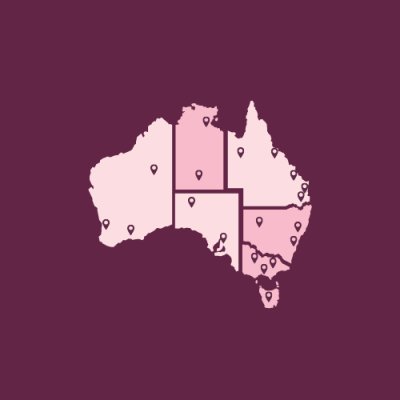
If you're going through a tough time, you're not alone. The COPE Directory is a supportive first step toward finding the right help, close to home and tailored to your needs

About us

At COPE, we believe every parent deserves access to compassionate support and reliable information. Our mission is to raise awareness, reduce stigma, and empower families facing perinatal mental health challenges.

Get involved

Your support can make a lasting impact. By donating to COPE, you help to provide vital support, resources, and research for families facing perinatal mental health challenges. Together, we can make sure no parent is alone.

Getting help

Understand when to seek help, how to take the first step of talking to someone, types of support available, plus how to find specialised perinatal mental health support near you.

Initial reactions to learning you're pregnant with twins, triplets or other multiples

Congratulations on your multiple pregnancy!

For some, finding out that they’re pregnant with more than one baby is an exciting surprise. For others, it’s a shock, and can take some time to get used to. It’s important to know that if you’re feeling anxious, overwhelmed, stressed or sad, then you’re not alone. Others describe feeling angry or even a sense of grief.

It’s also possible that you and your partner may react to the news of a multiple pregnancy differently. This may be frustrating if you’re out of sync but try to go gently with one another and keep communicating.

It’s a rollercoaster of emotions ... from highs of excitement to feeling scared and unhappy about having twins. I grieved the loss of a straightforward pregnancy and birth. 

How to cope with a multiple pregnancy

Physical health during a multiple pregnancy 

Multiple pregnancies can take a heavy toll on your physical health and wellbeing. You may have a higher likelihood of experiencing Hyperemesis Gravidarum (severe morning sickness), preeclampsia and/or gestational diabetes.

You’re likely to have more medical appointments and scans than a singleton pregnancy. While this can be time-consuming, there’s also plenty of opportunities to ask questions if you have any concerns about your physical or mental health or the health of your babies. Remember, there are no silly questions. 

Everything was doubled: the morning sickness was doubled; the pain was doubled. I feel the stress of it all was doubled. I love my babies and I’d do it again in a heartbeat if it meant I’d have them, but I get anxiety even thinking of my pregnancy.

Mental health during pregnancy with multiples

Because multiple pregnancies are considered high risk, expecting multiple babies can be a stressful and anxious time. Research has shown that rates of antenatal anxiety and depression in multiple pregnancies are much higher than for those expecting a singleton. That's why it’s important to be aware of how you’re feeling and how your partner is feeling over the coming months and throughout your first year of parenthood.

This doesn’t mean that you will experience one or both of these conditions, but it’s good to be mindful that they can occur – and that help is available.

My mental health seemed to struggle with the fact that I wanted to be able to do what I felt like I could but my body couldn’t keep up.

Mental health self-check

Take our free and anonymous mental health self-check for depression, stress and anxiety.

Why cant I get pregnant Self Checks

Seeking help during pregnancy with twins, triplets or other multiples

If you find that you’re struggling to cope during pregnancy, don’t be ashamed to ask for professional help. Seeking support early will help you manage during pregnancy and arm you with strategies for after your babies arrive.

I didn’t realise I was suffering as I thought it was normal to feel anxiety, lack sleep and be stressed because I was growing two humans. But someone talking to me could have helped.

If you are looking for professional support in your local area, you can search the COPE Directory.

Here you can search for individual practitioners or perinatal mental health services with expertise in mental health in pregnancy and when having a baby.

Building your village

Expecting multiples is a unique pregnancy journey and one only those who’ve been through can really understand. You can start building your village during pregnancy by connecting with other parents of twin, triplets or other multiples and/or joining online support groups.

"I got so sick of hearing people say, ‘I’m glad it’s you not me.'"

It’s important to note, however, that while connecting with others while pregnant with twins, triplets or other multiples will be a great support to some, others may find it can be more anxiety-provoking. Do what works for you. Remember, you can always connect with parents of multiples when your babies are born.

"It’s frustrating that a multiple birth pregnancy isn’t acknowledged as often being much more difficult than a singleton amongst society and peers."

A great way to build your village is to check out the local support services in your area.

The COPE Directory also lists support service – including all of the Australian Multiple Birth Association (AMBA) groups located across the country.  Find your local AMBA group and other support services today and start building your village of support.
Find help and support on the COPE Directory

Your postcode
COPE Directory Map Support Block

Preparing for birth with multiples

While most women pregnant with twins, triplets or other multiples will give birth via a c-section, it’s ok to ask questions of your maternity care providers and advocate for what you want. Although giving birth vaginally may not be possible, many women describe feeling dismissed by their doctors and not given a chance to discuss and understand their options.

"I personally struggled coming to terms with not being “allowed” a natural birth and being pushed for c-section at 38 weeks."

Around 60 per cent of multiples are born before 37 weeks. The rate is closer to 100 per cent for higher order multiples (triplets or more).

As such, it’s good to be prepared for the possibility that your babies may arrive early and what to expect if they require time in the SCN or NICU.

You may want to discuss this with your health professional or even read about the facilities at the hospital where you are planning to give birth or are likely to have your postnatal care.

Emotionally preparing for different scenarios can alleviate some of the anxiety of the unknown.

"The hospital talked to us at length about the process of the C-section with regard to our twins and also what would happen afterwards with the NICU. I think that really helped us mentally prepare."

Stay supported and feel reassured during pregnancy

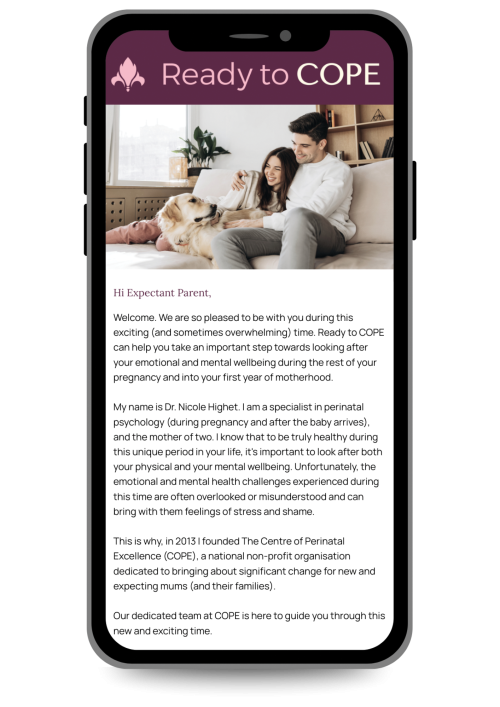
Sign up for the Ready to COPE guide to receive timely, supportive advice and reassurance throughout your pregnancy and the first year of parenthood. 

Ready to COPE also offers a special edition for those expecting more than one baby. 

Sign up now
Ready to COPE guide pregnancy and first year of parenthood

Strategies to help you cope with expecting more than one baby

While expecting multiples can be exhausting, stressful and nerve-wracking, welcoming your babies and watching them grow will be an incredibly special experience.

"It’s an absolute miracle to be pregnant with multiples. Embrace and enjoy it – even though it’s one of the hardest things you’ll do it is a true blessing."

Tips from parents of multiples

  • Pack your hospital bag early – around 25 weeks. "Once your bag is packed, keep it in the car to avoid any rushing."
  • Don’t forget to document your growing bump with lots of photos.
  • “Having a tour of the special care nursery prior to birth really helped.”
  • Keep in mind that you may need to go on maternity leave earlier than you had planned, which may have financial implications.
  • “Swimming was the only real relief. I also slept on ice packs which soothed a little discomfort.”
  • Read about breastfeeding/ feeding before birth and be prepared to ask people to give you time before they visit.
  • “Be kind to yourself as your body changes and your bump grows. Don’t compare your bump or weight gain to someone who is pregnant with one baby as it is natural for you to carry heavier considering you are growing multiple babies.”
  • Join your local support group with Australian Multiple Birth Association (AMBA)

Knowing at the end I’d have two beautiful babies really helped.

Other topics relating to coping with unexpected news at an ultrasound

Be safe online
Dismiss Alert

Click the Exit Site button or press "Esc" on your keyboard to exit this site quickly. Click here to learn how to keep your identity safe online.

Quick exit
Hide