Trying to conceive

At COPE, we’re here for you from the very beginning. Access trusted guidance, expert information, and compassionate support as you navigate the journey of trying to conceive.

Coping with loss

Coping with loss is deeply personal and painful — COPE offers gentle support, guidance, and understanding to help you navigate this difficult time.

Pregnancy

Navigate your pregnancy with confidence using COPE’s expert advice, emotional support, and reliable information tailored for every step of the journey.

Birth

Providing you with evidence based information to help prepare and nurture yourself before, during and following birth

New parents

Early parenthood can be joyful, challenging and everything in between. COPE provides you with expert guidance and real insights to help you feel seen and supported every step of the way.

Family, Friends & Community

Whether you're a partner, friend, or family member, COPE provides guidance and support to help you care for your loved one and yourself through every stage of parenthood.

Workplace support

COPE provides guidance and resources to help workplaces support the emotional wellbeing of expecting and new parents with care and understanding.

COPE Directory

If you're going through a tough time, you're not alone. The COPE Directory is a supportive first step toward finding the right help, close to home and tailored to your needs

About us

At COPE, we believe every parent deserves access to compassionate support and reliable information. Our mission is to raise awareness, reduce stigma, and empower families facing perinatal mental health challenges.

Get involved

Your support can make a lasting impact. By donating to COPE, you help to provide vital support, resources, and research for families facing perinatal mental health challenges. Together, we can make sure no parent is alone.

Getting help

Understand when to seek help, how to take the first step of talking to someone, types of support available, plus how to find specialised perinatal mental health support near you.

What is autism?

Autism is a lifelong neurodevelopmental difference. Autistic people have varying levels of strengths, challenges and needs in different sensory, communication, and social areas.1

How common is autism?

The latest data suggests that around 675,000 Australians or 1 in 40 2 are autistic. Women have traditionally been underdiagnosed or misdiagnosed and are often not diagnosed until adulthood - sometimes during the transition to parenthood.

Some people self-identify as autistic and don't receive a formal diagnosis.

Autism often co-occurs with ADHD - also known as AuDHD.3

Autism and pregnancy 

Some autistic expectant parents report feeling empowered, strong and capable during pregnancy, as well as increased body positivity.4For some, the capacity to hyperfocus is a significant advantage, enabling deep research and informed decision-making. 

For others, communication challenges (including being misunderstood, judged or dismissed by health professionals) and unmet sensory needs within maternity and birthing settings can mean that autistic people often fail to receive adequate care during this vulnerable time.

[I was] overstimulated the entire time. Sensory overwhelm from my body feeling different, the baby moving (while I knew it was good) was sensory hell. My body was hot and that caused distress. Things were making noises and different, which also caused distress. 

Many medical appointments and waiting rooms (bright lights, music, other patients talking etc). Ultrasound technicians using different gels (some were hot, some were cold - the unpredictable nature was unnerving).

Jess (COPE, 2026)

Challenges in pregnancy for autistic people

COPE's 2026 survey highlighted some aspects of pregnancy and birth that can be particularly challenging:

Sensory challenges

- The hospital environment/antenatal care is often overwhelming due to lighting, noise, unfamiliarity and the presence of other patients in shared spaces.

- Heightened sensitivities to light, sound, touch, and particularly smell can exacerbate typical pregnancy symptoms (e.g. nausea).

- Some autistic people reported diminished hearing and touch. 

- Difficulties finding safe foods while struggling with HG, which can increase anxiety.

- Medical examinations and being 'touched out' by health professionals or not being asked for consent before being touched.

- Feeling the baby's movements can be distressing.

"Everything was amplified - symptoms, emotions, sensory issues." (COPE, 2026).

Feeling misunderstood, dismissed and judged

- Expectant parents felt misunderstood, dismissed or not taken seriously by health professionals.

- Some reported feeling judged and worried about disclosing their diagnosis for fear of stigma and how it would impact their care.

"I felt the hospital was reluctant to acknowledge my autism. They were more focused on my previous ' anxiety' diagnosis, which was heavily influenced by my undiagnosed autism." Emma - (COPE, 2026)

Social and emotional demands of navigating the health system

- Difficulty with multitasking and attending numerous medical appointments with different health professionals.

- Lack of predictability and dealing with unknowns

"Often the waiting rooms were overstimulating on top of the internal distress I was feeling, and by the time I went into the appointment, my blood pressure was too high, or I wasn't able to think clearly enough, or articulate what it was. I needed my husband with me the entire time to speak for me (which can come across as controlling), but when I lose the ability to speak, I need someone to do it for me." Jess (COPE, 2026)

-  Many autistic parents reported using coping strategies such as masking when engaging with health professionals, hiding or downplaying distress.

- Inadequate or no accomodations made for different communication needs or preferences. This included appointments not being long enough, and information only being provided verbally.

- Feeling "too much" or ridiculed for needing more clarity or wanting to plan.

"I developed a birth plan, but was laughed at when taking it to the hospital. I know things don't always go to plan, but having my thoughts and hopes documented felt important to me." Anon (COPE, 2026).

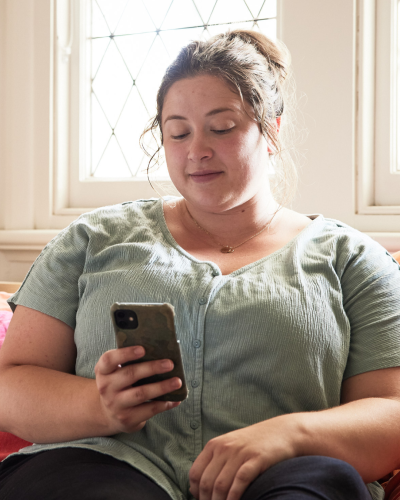
The sensory overwhelm and overstimulation was significant during pregnancy - the bodily sensations of nausea and vomiting, frequent or constant back pain or muscle aches, baby movements, a sense that my body wasn't my own anymore, as well as the overstimulation from accessing busy maternity care.

Megan (COPE, 2026)

Challenges during labour/birth

  • Sensory overwhelm in hospital settings and often limited and inadequate accommodations made by maternity settings, even when asked for.
  • Physical touch and sensory processing difficulties for example around cervix examinations could be distressing and lead to meltdowns or shutdowns.5
  • Communication barriers resulting in feeling unable to advocate or describe pain.
  • Differences in interoception (the ability to identify internal body signals) made it hard for women to recognise the onset of labour or interpret pain.
  • Loss of predictability and control due to uncertainty around labour. 
  • Feeling disconnected from reality.


"I felt very out of control and like everyone around me was telling me what I needed to do. It made me feel completely incapable of understanding my own body and needs, let alone speak up about them. The birth experience in particular - where doctors and midwives are doing things without explaining it and I am not informed, consenting or in control." Anon - (COPE, 2026)

Autism and perinatal mental health

Autistic people are more at risk of experiencing depression and anxiety during pregnancy.6

I suffered PTSD and severe perinatal depression due to the trauma caused by sensory overload and being misunderstood. (COPE, 2026).

This can be compounded by feeling dismissed, misunderstood or not taken seriously by health professionals, particularly in the absence of continuous care.

For some expectant parents, concerns around the stigma of sharing distress with health professionals can prevent or delay help-seeking and increase feelings of isolation.

Mental health self-check

Take our free and anonymous self-check for depression, anxiety and stress.

Why cant I get pregnant Self Checks

Tips and strategies 

Talk to your health professional and advocate for your needs

- If you can and feel able to, it can be helpful to speak to your health professional early on about your diagnosis and your communication and sensory needs during pregnancy. 

- Some autistic people find continuity of care helpful during pregnancy, so explore if this is available.

- Have a trusted support person attend appointments.

"I needed to know the midwife team I will have and build trust." Anon (COPE, 2026)

Look after your sensory needs

- Minimise sensory overload. This might be through requesting dim lighting and quiet spaces, using headphones or other sensory items. 

"Consider your sensory needs and how they will be impacted with a pregnancy, during labour, when feeling vulnerable and postpartum. Seek support to understand these needs and to plan to better work with your neurodivergent brain rather than against her." Anon - (COPE, 2026)

Advocate for your communication needs and preferences

- Taking in and processing lots of new information can feel overwhelming. Ask your health professional to repeat or explain things, or to present information in other formats such as social stories or in a written format. They are there to inform and support you.

"Pregnancy was pure overwhelm, but I survived it because of systems the OB helped put in place; finding the perfect midwife for me during induction and c-section; cooling the room before I arrived; talking things through before they happened; arranging extra psychological assistance; offering tours of the hospital and theatres before going in." Jess (COPE, 2026)

Nurture your wellbeing and link in with supports early

- It can be difficult to prioritise self-care and what this looks like will be different for everyone - depending on your needs, your energy levels and any other responsibilities or demands you're managing during pregnancy. 

-Some people find peer support helpful and validating, whether it's linking in with forums online or in-person groups. 

"Try and get outside once a day, there is a lot of resources online but not linked well together. Build a village, and don't be afraid to disclose - lots of people are neurodivergent these days." Charlotte - (COPE, 2026).

- You can find more detailed self-care tips in this resource from Aspect here.

Aspect's Autistic Pregnancy and Parenthood Hub

For more information and guidance including real stories and further resources for antenatal care, you can visit Aspect's Autistic Pregnancy and Parenthood hub. 

Explore a visual pregnancy story for your first trimester here, with information about the timeline of pregnancy and what to expect at your first doctor's appointment. 

You can find a visual pregnancy story outlining what appointments may look like after thirteen weeks here.

You can complete a neuroaffirming birth plan using this template to share with your health professionals.

This guide to disclosing your diagnosis may also be helpful during pregnancy and early parenthood.

Seek support early 

Ask for help when you need it - you don't have to struggle or navigate pregnancy alone. There are neuro-affirming health professionals, many with lived experience, who can provide support.

A neuro-affirming approach doesn't try to "fix" or "change" neurodivergent people. Instead, it aims to provide supports, services and accommodations that are person-centred, trauma-informed and affirm neurodivergent identity and individual needs.8

To find support, search the COPE Directory. 

Find help and support 

Your postcode
COPE Directory Map Support Block

Tell us about your experience

Neurodivergent individuals can experience unique challenges in pregnancy, childbirth and early parenthood.

Completing this short, anonymous survey will help provide COPE with valuable insights to educate health professionals and support others.

Take Survey Vertical

Further reading and resources

Yellow Ladybugs is a non-government organisation, dedicated to the happiness, success and celebration of autistic girls, women and gender diverse individuals. 

Autism Connect is a free, national autism helpline, providing independent and expert information over phone, email and webchat. Autism Connect is open 8am to 7pm, Monday to Friday. 1300 308 699

References

  1. Autism Spectrum Australia. (2026). What is autism? https://www.aspect.org.au/about-autism/what-is-autism
  2. Autism Spectrum Australia. (2026). About autism. https://www.aspect.org.au/about-autism
  3. Tony May. (2024, July 10). What is AuDHD? 5 important things to know when someone has both autism and ADHD. The Conversation. https://theconversation.com/what-is-audhd-5-important-things-to-know-when-someone-has-both-autism-and-adhd-233095
  4. Amanda M. A. Love, Cai, R. Y., Rideout, B., Hollenberg, L., Clapham, H., McKeown, G., Edwards, C., Robinson, A., Benzie, C., & Gibbs, V. (2025). Stories of competence, challenges, and coping: The experiences of Australian autistic people during pregnancy and early parenthood. Autism in Adulthood. https://doi.org/10.1177/25739581251359894
  5. Sarah Hampton, Allison, C., Simon Baron-Cohen, et al. (2024). Autistic people’s perinatal experiences I: A survey of pregnancy experiences. Journal of Autism and Developmental Disorders, 54, 211–223. https://doi.org/10.1007/s10803-022-05754-1
  6. Jata K. Elliott, Buchanan, K., & Bayes, S. (2024). The neurodivergent perinatal experience—A systematic literature review on autism and attention deficit hyperactivity disorder. Women and Birth. https://doi.org/10.1016/j.wombi.2025.101967
  7. S. Thom-Jones, Melgaard, I., & Gordon, C. S. (2025). Autistic women’s experience of motherhood: A qualitative analysis of Reddit. Journal of Autism and Developmental Disorders, 55, 2539–2549. https://doi.org/10.1007/s10803-024-06312-
  8. Department of Social Services. (2024). National Autism Strategy 2025–2031. Commonwealth of Australia.
Be safe online
Dismiss Alert

Click the Exit Site button or press "Esc" on your keyboard to exit this site quickly. Click here to learn how to keep your identity safe online.

Quick exit
Hide