There are a groups who are likely to require additional support in the perinatal period due to heightened risk factors and/or special circumstances.
There are groups who are likely to require additional support in the perinatal period due to heightened risk factors and/or special circumstances.
Women with a past history of mental health disorders
Women with a past history of mental health disorders are at increased risk of relapse in the perinatal period and are likely to require specialist care. They will also benefit from ongoing support provided through primary care.
Supportive approaches include planning for a longer stay in hospital with midwife/maternal and child health nurse visits after discharge, assisting women to maintain regular sleep patterns and supporting the mother-infant interaction.
Mothers with unsettled babies
Disturbed sleep can be associated with mental health problems, particularly if the woman perceives her baby’s unsettled behaviour or poor sleep patterns to be a problem.
Assisting the woman to understand normal infant behaviour and adjust her expectations about sleep patterns may help to increase her confidence and ability to manage.
If the period of disturbed sleep is prolonged, and/or the woman does not adjust, she may experience distress that adversely affects other aspects of her life. In such cases, specific care (e.g. in an early parenting centre) may be useful to improve the infant’s sleep behaviour and help to reduce the woman’s sleep deprivation.
Women who experience multiple births
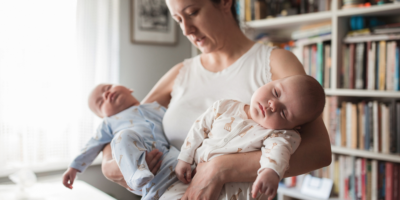
Women, who have twins or triplets, either through assisted reproductive technology or naturally, are likely to experience an even wider range of emotions during the pregnancy and after the birth and may need both practical and emotional support.
Women who experience complex pregnancies or birth
If a woman’s expectations of pregnancy and birth are not realised because of complications or illness, disappointment, guilt and grief may result. Women may benefit from being able to talk about their experience of pregnancy and birth and reconcile their expectations with what actually happened.
Mothers separated from the infant after birth
Women who are separated from their babies after birth because they are premature or unwell are at increased risk of depression and difficulties with the mother-infant interaction. Psychoeducation may assist in preventing depression and anxiety in women with a prematurely born infant.
Parents who have lost a baby
Many of the symptoms of perinatal depression and perinatal grief are similar. It is important to differentiate the two conditions, so that bereaved parents are not misdiagnosed and given inappropriate treatment.
Assertive follow-up may be required to provide ongoing care and support to women who have lost a baby, as they are less likely to attend health services and are at increased risk of experiencing depression. Women whose babies have died in the perinatal period and who score 13 or more on the EPDS should be referred to an experienced bereavement practitioner.
