Hannah’s story
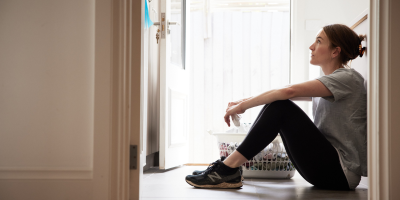
It took 18 months for Hannah to receive a diagnosis of PTSD following her traumatic birth. She’s sharing her story as part of COPE’s The Truth Campaign to help others feel less alone and to encourage women and their partners to seek help when their birth doesn’t go to plan.
Hannah had expressed to her obstetrician that if she could avoid it, she didn’t want to have any interventions. So, she was shocked and confused when he broke her water without discussing it with her first. “At this point, there was a bit of a disconnect,” she recalls, adding that she was disappointed and upset. This only continued when Hannah was told to push. “It felt sort of forced,” she says. “It felt as though I was being told. But it’s your first baby so you don’t know what you’re supposed to be doing.”
I had so many hopes about my birth and ideas about how it would play out. Afterwards it sort of became clear that it wasn’t going to work out the way I had hoped. I just didn’t feel right. And I worried that this would have a huge impact on the rest of my life.
Hannah remembers feeling lonely and says her husband was “terrified as well”. But when their baby was safely delivered attention turned to their new son. “Everyone was happy and I was happy as well. But I guess that’s when the problems sort of started for me because you’ve got a healthy baby and people keep telling you that – but I spent the whole night crying. I didn’t feel right.”
Hannah says she was confused about why she was so distressed. I didn’t know why I felt that way. I didn’t know why it had happened that way. I said to the midwife ‘I’m really teary.’ She said, ‘that’s normal’. So I didn’t say anything more about it.” But she found herself struggling as the night went on.
I didn’t sleep all night. I just cried. I kept mulling it all over in my head. It kept playing on repeat. I could hear my own screams in my head because that’s what happened when they pulled this baby out of me. It was on repeat.
Hannah also found it difficult when midwives changed over their shifts. “They reel off who you are, ‘this is Hannah, forceps delivery’, and you just keep hearing it over and over. But it was said in a way that had no acknowledgement of the impact on me. It didn’t feel like I could talk about it. It felt like what I was thinking about the birth was wrong and I must have just been blowing it out of proportion. Maybe I was weak?”
The crying continued when Hannah got home. “I cried every day for three weeks. I was very good at hiding it. I have a history of not showing my emotions and hiding my anxiety and just going on as if everything was okay. But even when mentioning that I had been crying every day for three weeks, it didn’t set off any alarm bells for anyone. They asked me, ‘do you think you need to see someone?” And I said ‘no, no I don’t. “It kept staying with me though. It was in my mind. Those long nights up with the baby it was on replay in my head.” While Hannah had suffered from depression before, what she felt after the birth was different.
I couldn’t really figure out what the feeling was and why it wouldn’t go away. But I thought I would be okay. I thought I just needed time.
When she was eventually referred to a local mental health service, she says she didn’t have a good connection with the counsellor. “I don’t think they were treating me for PTSD which is what I eventually found out I had.”
Hannah turned her focus to her physical health, seeking out a woman’s physio for treatment of her pelvic floor symptoms – a side effect of her forceps delivery. Once again, she felt a lack of empathy and compassion from those who treated her. “It was like ‘I think you’ve got prolapse. This is your life now.’ There was no kind of acknowledgement of how this might impact me – a 30-year-old woman who still wants to exercise and pick up her kids.”
Her emotional health continued to suffer. “I ended up going back to my GP and asking for another referral. She said, ‘I think maybe you’re looking in the wrong place.’ And that’s when I found my current psychologist who pretty much changed the course of my life. She finally saw what was wrong and was able to help me. So this was 18 months in and that’s when I got my PTSD diagnosis and we started working on that together.” For Hannah, feeling “acknowledged and seen” made all the difference.
Just to have someone listen and say, ‘yes there is something wrong, this isn’t normal, and this is why you’re feeling like this and I’m going to help you get through it,’ was life changing.
Reflecting on her experience, Hannah says the “at least” statements were particularly painful. You hear things like ‘at least you’re able to have a baby. Think about those people who can’t, or people who lose their babies.’ It brushes aside lots of valid feelings. And you feel guilty for having them. It makes it feel really difficult to live your life. I felt like what I was feeling was wrong and it made me push those feelings down even more.
The birth also left her husband traumatised. “It would have been awful for him,” Hannah admits. “Trying to go through that and not really knowing what was wrong with me. He obviously knew something wasn’t right, but he didn’t know how to help me either.”
Hannah explains that her husband was in shock and that processing what they went through together has been tough. “I kept trying to mine him for information about what happened. And I think having to re-live that was pretty difficult for him. And especially because I’ve said to him, ‘I felt so alone in that moment.’ He probably feels bad about that. It wouldn’t be easy to see someone you love in that situation, screaming and in pain and being worried about his baby too. There was no communication I think that’s where it all fell down.”
Now a mother of two, Hannah feels proud of how far she’s come and wants to use her experience to help others. I really struggled to talk about this. I still do, but I think [my psychologist] helped me realise that it’s part of my story. I really want to be able to help other people as well, which would be a silver lining. If people don’t feel so lost like I did I think that would be great.”
The facts about birth trauma and post-traumatic stress disorder (PTSD)
Dr Nicole Highet, Doctor of Psychology (Clinical / Perinatal)
Having a baby is something that many of us aspire to and hold expectations of, often informed by our own experiences, what we hear from others, or even the media – what we see and read.
Often however what it portrayed or spoken about, does not always reflect the true reality of what becoming a parent can be like. As a result, when a person may be struggling with the more difficult aspects of parenting, this can leave them feeling like they are the only one who might be struggling, when in fact this is simply not the case.
COPE research undertaken with women who experienced anxiety and/or depression during the pregnancy or early years of motherhood, revealed that 74 per cent of women did not seek help until they reached the point that they could no longer cope. One of the main reasons for not seeking help early was because they were ashamed and afraid of others might think of them, not only as a person but also they feared how they would be judged as a mother.
Similarly, many men also do not communicate when they are struggling. In particular many new fathers feel pressure to ‘be the strong one’ and relied upon for strength and support in their new parenting roles.
As shame and stigma often prevents new parents from speaking up with family and friends, this robs them of the opportunity to access support from others – when they need it. It also perpetuates the often ‘unreal’ culture of everything being perfect.
Shame can also prevent expectant and new parents from telling the truth when speaking with their health professional. In turn prevents their needs being identified and support and or treatment being provided.
It is therefore very important that as a society, we raise awareness about the many struggles that can come on the journey to parenthood, and let expectant and new parents know that they are not alone in the more difficult times and that help is available. This is the strategy the underpins the new #thetruth campaign.
It is also important that we educate professionals about how to sensitively raise issues and create a supportive environment, so that those in their care feel safe and able to disclose if they are struggling and access timely and effective care.
