The phone call my husband made for help was the most important phone call of our life
“I can’t come into work… My wife is unwell…”
“I can’t come into work… My wife is unwell...” sounded ‘normal’ for the first few days, when it sounded like a cold or the flu. Then my husband's one week away from work turned into 4 weeks…
Where do we even begin? Unpacking mental health experiences with your partner is huge! How did you know? When did you know? When did you make the call? These are all questions that I have asked my husband for the last 3-4 years.
You see, my partner and I have been together for over 10 years, yet during my delusions, I was of the belief that he was not to be trusted, and my life was going to end with the pandemic if I went into the Emergency Department. The moment he made the call for help was the moment I felt betrayed. Lots of therapy later, I now know that I wasn’t betrayed.
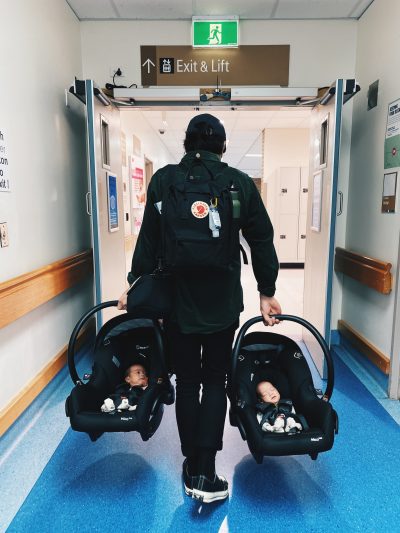
The phone call my husband made for help was the most important phone call of our life - and of our two children’s lives, who were in the NICU at 35 weeks.
“We had never seen this version of me before.”
He still remembers these moments so vividly. He sat in the corner in the Emergency Department at Westmead Hospital. He sat there so long that he melted into the seat. For over 10 hours, I was triaged by the medical team and Donald had no idea what was happening. We had never seen this version of me before.
He sat there Googling all sorts of ‘perinatal things.’ He read a lot about Postnatal Depression but not much on what I was later diagnosed with… Postpartum Psychosis. Only 1 in 1000 women experience this very serious but treatable illness.
Thanks to COPE and PANDA, Donald was able to read stories like these and put things together. When he finally received an update from the hospital, it brought him a sense of relief, as he was searching for answers. By having a diagnosis, he was able to research and have a better understanding of what was happening to me. He felt like he needed to know how to explain this to our family.
“He felt like he needed to know how to explain this to our family.”
Explaining a mental health diagnosis is not simple. It actually makes little sense when mental health is not something that pre-exists in your family. How are the kids? How long is she in the hospital? Can she see the kids? When is she coming home? These are all questions that Donald ultimately struggled to answer.
At the time of my admission, no visitors were allowed due to the pandemic. Donald was only permitted in the hospital because we had two premature babies in the NICU. Sadly, he was only able to see me through a glass door, as he collected my expressed breastmilk for our twins.
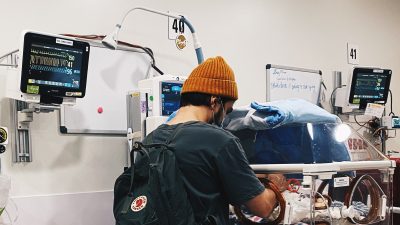
Not only did Donald have two children in the NICU, but he also had a very unwell wife. He watched the sunrise and the sunset at the hospital. He ate breakfast, lunch and dinner at the hospital every day, for 7 weeks. For the 4 weeks that I had my admission, it was truly hard on Donald. He felt like he couldn’t tell many people because they just didn’t 'get it'. Even to this day, we struggle to find people who understand and “get it”.
“You need to be prepared to be the sole parent, should you need to be.”
When I asked Donald what it is like to do life with someone with a mental health condition, he said, “It gets better with time and with every admission. You need to have an understanding workplace for when your leave turns from 1 week to 4 weeks.” He also explained, “Doing life with someone who lives with a mental health condition means you need to be prepared to be the sole parent, should you need to be.” (He has done amazingly well at this, as I have had three other admissions since).
When loving someone through sickness and in health, it can heal the one who gives love and the one who receives it. Loving through mental health challenges transcends time and space. Although our experience was traumatic, we find solace in being able to speak up about it and help others relate to something, so different from the ‘normal’ postpartum journey.