Jade's story
Autism and pregnancy
Some autistic expectant parents report feeling empowered, strong and capable during pregnancy. For others, communication challenges and unmet sensory needs can mean that they fail to receive adequate care.
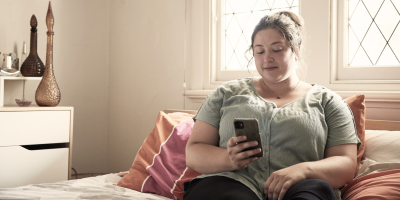
My first birthing experience wasn't a positive one - a botched episiotomy left me feeling disrespected, disassociated and took seven months for my body to heal. Looking back, it wasn’t the best start to motherhood, but at the time I brushed it off with the common attitude of: "It could have been a lot worse”.
My son struggled to latch. I found it very overwhelming and confusing- every midwife gave me different and sometimes conflicting advice. I left the hospital with bruises all over my nipples, still not knowing how to 'do it properly'. Thankfully we finally got the hang of it with the help of a nipple shield. I’m grateful I was able to breastfeed my son for 13 months, but to be honest it wasn’t the calming, bonding experience that I’d heard others describe it as. My baby was very 'clingy' and would not be put down to sleep on his own, no matter how hard I tried. And trust me, I tried it all…he didn’t want a bar of it.
To maintain my sanity, I had to learn to surrender, to allow him to sleep in my arms for naps and in my bed over-night. I had to go against the advice I was hearing; that I needed to train him to sleep, that he needed to self soothe; that I was making things harder for myself by allowing these 'bad habits' to form. If you have had a baby that struggles with sleep, I’m sure you know just how loud and pervasive these ideas can be. And while I know it can be helpful for some, it wasn’t for us. If anything, it made me feel like there was something wrong with my baby, and something wrong with me as his mother. The truth is a lot of babies need extra support and closeness to fall asleep and stay asleep, especially if they are neurodivergent with sensitive nervous systems, as I later came to understand about my child.
JadeI struggled with the constant demands of motherhood. Having a baby that didn’t want to be put down meant I constantly felt “touched out”. I desperately needed time and space away from my baby to “recover” but whatever breaks I did get, were not enough and came with a lot of guilt.
Neurodivergent individuals can experience unique challenges in pregnancy, childbirth and early parenthood.
Completing this short, anonymous survey will help provide COPE with valuable insights to educate health professionals and support others.
It is physically painful for me to listen to his cries. This was something I didn’t understand at the time, but I now know is directly related to me being autistic.
I was experiencing sensory overload and autistic burnout but didn’t have the language or understanding of that until much later on. The red flags for postnatal anxiety and depression were there, so that’s what I was diagnosed with when I visited the GP at 6 months postpartum.
That was the beginning of my arduous journey to obtain the illusive “recovery” from mental illness. I was prescribed antidepressants and started seeing a psychologist. When things weren’t getting any better, I tried different medications and different psychologists. Everything just felt so hard, all the time…but I was so determined to “get better”.
My son was about two and a half when the psychiatrist I had just started seeing told me she thought I might actually have bipolar disorder. This news came as a relief to me; I thought that finally if I could receive the correct diagnosis and proper treatment, that I would start feeling better. I was prescribed a mood stabiliser and started seeing a new psychologist. And for a little while there I did see improvements, I felt like I was on the right track.
It was around this time that we had started to pursue an autism diagnosis for my son. I wanted to learn everything I could about autism so I could best understand and support my son.
What I didn’t expect in my hyper-focus on autism, was to start seeing myself in the words I was reading and listening to. It was one of those “Ah-ha” moments where it just clicked, and all of the things that didn’t make sense with the bipolar diagnosis, were explained when viewed through the lens of autism.
So I’d finally figured out what was behind all of my struggles. Not just the postpartum struggles, but as I looked back on my life, everything started to make sense. Why I had always found socialising so difficult and draining, why I always felt like the “odd one out”. I realised that I’ve always had sensory issues, I’d just learned how to adapt, I’d developed coping mechanisms, that were no longer available to me once I became a mother.
My self-identification as autistic was a huge moment for me, it gave me an immediate sense of validation and allowed me to start treating myself with the kindness and grace I have always needed, but never shown myself.
The depression I had constantly felt since becoming a mother, eased significantly. For some people, self identification is enough. For me it wasn’t. I have spent my whole life overthinking everything and constantly second-guessing myself. After 2 years of going back and forth about it in my head, I finally booked in for an autism assessment and received the official validation of a diagnosis.
In this time, I’d gone on to have my second child and the sensory overwhelm that an additional child brought to my life made my autistic traits seem so much more obvious. The constant noise and constant touch felt almost unbearable at times. If both my children are crying at the same time it feels like the world is caving in on me.
I’ve spent a lifetime minimising and ignoring my needs, or not even being aware of them! I’m slowly starting to understand what my sensory needs are and trying my best to accommodate them. Seemingly little things like wearing noise cancelling headphones and using stim toys aren’t actually little things at all, they can make a big difference with mood regulation and my ability to cope when I’m stressed. I don’t currently have the level of support that I would like, to feel like I am coping well…but I’m hopeful that I will get there. The fact is that I have an invisible disability, which does in fact disable me to a degree.
Getting the right support when the onus is all on the disabled person is not easy, but unfortunately that is the reality for many of us “late diagnosed, high masking” autistic adults.
My son finally received his AuDHD (autism and ADHD) diagnosis recently, and even though speaking up and advocating does not come easily to me, my desire for him to have the support that he needs to thrive, motivates me to push forwards, to speak up and to advocate for autistic people, my son and I included. No matter where you are on the spectrum, your needs are valid and important, and you deserve support.
Some autistic expectant parents report feeling empowered, strong and capable during pregnancy. For others, communication challenges and unmet sensory needs can mean that they fail to receive adequate care.
Some autistic expectant parents report feeling empowered, strong and capable during pregnancy. For others, communication challenges and unmet sensory needs can mean they fail to receive proper care during this time.
Attention Deficit Hyperactivity Disorder (ADHD) generally begins in childhood, with many people diagnosed at the life stage when they are having children.
For some people, ADHD symptoms may present challenges during pregnancy and early parenthood, while many parents describe positive aspects of neurodivergence.
Click the Exit Site button or press "Esc" on your keyboard to exit this site quickly. Click here to learn how to keep your identity safe online.
