Rebecca's story
Postpartum psychosis
Postpartum psychosis, also referred to as postnatal psychosis or puerperal psychosis, affects 1-2 in every 1000 mums.
At COPE, we’re here for you from the very beginning. Access trusted guidance, expert information, and compassionate support as you navigate the journey of trying to conceive.
Coping with loss is deeply personal and painful — COPE offers gentle support, guidance, and understanding to help you navigate this difficult time.
Navigate your pregnancy with confidence using COPE’s expert advice, emotional support, and reliable information tailored for every step of the journey.
Providing you with evidence based information to help prepare and nurture yourself before, during and following birth
Early parenthood can be joyful, challenging and everything in between. COPE provides you with expert guidance and real insights to help you feel seen and supported every step of the way.
Whether you're a partner, friend, or family member, COPE provides guidance and support to help you care for your loved one and yourself through every stage of parenthood.
COPE provides guidance and resources to help workplaces support the emotional wellbeing of expecting and new parents with care and understanding.
COPE offers tools, training, and resources to support health professionals in providing compassionate, evidence-based care to expecting and new parents.
If you're going through a tough time, you're not alone. The COPE Directory is a supportive first step toward finding the right help, close to home and tailored to your needs
At COPE, we believe every parent deserves access to compassionate support and reliable information. Our mission is to raise awareness, reduce stigma, and empower families facing perinatal mental health challenges.
Your support can make a lasting impact. By donating to COPE, you help to provide vital support, resources, and research for families facing perinatal mental health challenges. Together, we can make sure no parent is alone.
Understand when to seek help, how to take the first step of talking to someone, types of support available, plus how to find specialised perinatal mental health support near you.
Rebecca's story
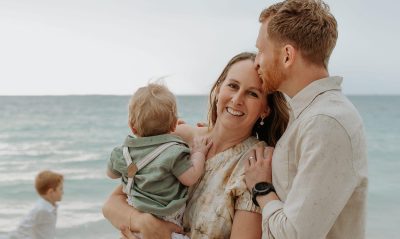
I experienced a severe episode of postpartum mania and psychosis upon the birth of my first son Aidan seven years ago. It left me hospitalised in a mental health ward and then Mother and Baby Unit from his Boxing Day birthdate until Easter.
Ultimately, I underwent many different medication changes, lots of therapy with psychologists and psychiatrists, and nearly 20 rounds of ECT before I could begin to come back to myself from this life-altering illness. The doctors always reassured my family a full recovery was possible, and it is true - I now believe I am an even stronger, better version of myself having suffered and then recovered.
Psychosis is like waking up in a terrible nightmare - one full of paralysing fear, delusion, grandiose idealisations, numbing exhaustion, obsessive and cyclical thinking coupled with a severe lack of sleep. The one silver lining was that, while the rest of my mind was withdrawn to a dark and unusual place, the one thing I held onto was my motherly instinct. I never wished harm on my son and was at most peace being with him. I understand many people would consider this experience incredibly off putting and a massive barrier warning them not to go down the road of becoming a Mum again, and indeed it’s very hard to recover from. It is hardest thing I have ever experienced but the desire to become a mum again was a wish so cemented in my mind, it became stronger than the psychosis.
I knew that, once recovered, I would try again for another baby. I can’t deny I was afraid of a relapse and warned of the dangers, but I knew the reward of another child and the chance to see my eldest son as a big brother far outweighed any fears I harboured.
Keep in mind this was a stand-alone episode for me, I had never previously encountered mental illness before, and now I faced the fact that other recurrent psychosis in my future could have meant a bipolar diagnosis. I began to speak to a therapist prior to falling pregnant, who therefore knew me in my well days so she could recognise any changes during or following my pregnancy. The consistency of her therapy and care meant that she knew me well, and I had a steady support person ready to go should a relapse occur.
Postpartum psychosis, also referred to as postnatal psychosis or puerperal psychosis, affects 1-2 in every 1000 mums.
Postpartum psychosis is a condition that can affect a woman’s thinking and behaviour shortly after the birth of her baby.
Aside from the strong resolve in my mind and regular therapy, my family and friends could also advocate for my care having been through the system before. They were far more aware of the warning signs and triggers for my illness. When I finally fell pregnant (after many years of trying again) I was so overjoyed and cautiously optimistic that things could be different this time. I immediately was proactive by contacting King Edward Memorial Hospital in Perth, who have an MBU on site. Unlike my first pregnancy, the public system was where I needed to be.
I was very forthright and passionate about furthering my knowledge about the type of labour I desired and the needs we required for my care throughout my pregnancy and postpartum period. I took the doctors’ advice to take some sleeping tablets when I was struggling to maintain a steady sleep pattern in my pregnancy. I also begrudgingly took a low dose of an antipsychotic medication considered safe in pregnancy for the final trimester.
Stress and sleep management was paramount throughout my pregnancy, and I used strategies including meditation, pregnancy yoga, journaling and gratitude, and visualisation.
Telling myself every day that a relapse would not occur and reassuring my husband and family of this was incredibly empowering. I had all the support around me and had informed myself and prepared the best I could. I couldn’t wait to welcome another baby, and I did not want to miss any more of my eldest son‘s life to mental illness. However, when my second son was welcomed into the world, the labour was long and transpired very similarly to the first time, which was scary and triggering for my husband and I. I had a beautiful, healthy second baby boy, so I leant into the care I was given and tried to trust the process.
It was previously decided that a preventative stay in the MBU would be the best for myself and my new child. As soon as I was physically ready, a bed fortunately became available and we were moved into the MBU. I will admit, I originally hated being there because it reminded me of when I was very sick, but this time I was completely myself and well in the space. I took advantage of all of the midwife care, including putting my baby in the nursery in the middle of the night, so I could sleep through one of the feeds. This meant expressing milk and relying on the nursing team at the MBU. My husband also visited my son and I every day, and took on feeds with a bottle where possible. I continued to take medication in a low dose for the early months and was discharged from MBU weeks after his birthday as a happy new mum of two.
We named our second child Zavier because it means saviour, a new light, and that’s what he gifted us.
The experience of birthing again and being well meant I had a second chance to be present for a newborn baby, which PPMP robbed my family of the first time around.
I know that my mind was stable and I was never going to experience another mania and psychosis relapse. And I didn’t and haven’t, recently celebrating Zavier’s second birthday. I would urge all women who have undergone PPP to remember you deserve all of life’s joys and healing time.
Having a second pregnancy was a restorative, whole circle journey for my family and I, inspired proof that I really could do anything. If you are strong enough to return from losing your mind, you are strong enough to manifest anything, even a healthy and happy second journey for your family and yourself as a mother.


Click the Exit Site button or press "Esc" on your keyboard to exit this site quickly. Click here to learn how to keep your identity safe online.