Jac's story
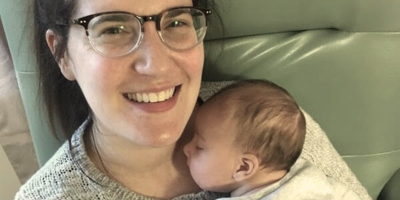
Neither myself nor my family had ever heard of postnatal psychosis. Suffice to say it came as a complete shock when I experienced it!
Raising awareness about this potentially devastating condition has become something myself and my family are determined to do.
I think what is interesting is that I have experienced quite a range of reactions to my experience from health professionals. I’d say in general it’s met with curiosity, but I have had a few people assume that I must have been using illicit substances or had a long history of mental health issues prior to my diagnosis.
I’ve also come across a real reluctance from health professionals to raising awareness about it with expectant mothers and their families due to “not wanting to scare them”. I feel like this is such an opportunity lost. We wished we’d been armed with greater education. If only we’d heard about it earlier, my condition may not have been so severe as it may have been picked up earlier, or at least it may not have been so traumatic from my husband’s perspective.
"We wished we’d been armed with greater education. If only we’d heard about it earlier, my condition may not have been so severe as it may have been picked up earlier, or at least it may not have been so traumatic from my husband’s perspective. "
However, and this may come across as strange, my experience of postnatal psychosis was life changing in such a good way. I’d really like to get the message across to mums and families that good can come after a ‘storm’. There is so much fear and negativity surrounding mental illness. It’s rare that people hear how the experience has made a new mum stronger.
What it was like to experience
Don’t get me wrong, the psychosis was utterly terrifying at times. I spent weeks in acute psychiatric wards and during that time my delusions made me believe I was an ASIO spy saving the hospital from an imminent terrorist attack. As a result, I tried to escape from my room, running around, doing barrel rolls and setting off fire alarms.
I find it hilarious now but at the time I was convinced everybody in the hospital was going to die, so it was very scary!
I also had many lovely delusions. I believed I was Princess Catherine, that I was mega wealthy, that I was going to end poverty and solve climate change …all pretty cool really! Ultimately though the experience has made me a stronger, more empathetic, more content person. And I am so very thankful for that.
Lasting insights
The experience has made me realise that during that time my son and I were part of an extremely vulnerable, silent population of people: the depressed, the psychotic and the very young. And I realise that I am privileged in that I’m white, highly educated, health literate, I have good financial resources and an enduringly supportive family. Yet my family and I found it difficult to navigate the public mental health system and know what to do and where to go for help.
"The experience has made me realise that during that time my son and I were part of an extremely vulnerable, silent population of people: the depressed, the psychotic and the very young."
Clearly, something is wrong here. I want to stress that the care I received in the acute psychiatric ward and Mother Baby Unit where I spent 14 weeks across three separate admissions was phenomenal. The staff were outstanding. But the system is confusing and predominantly only serves individuals in absolute crisis.
There also simply are not enough Mother Baby Units and so you get this awful postcode lottery situation in terms of access to care. Likewise, the support for family members is basically non-existent. My husband felt extremely isolated by the experience which he in part puts down to having trouble finding quality information about PP, especially lived-experience accounts.
Ultimately, my story is a positive one. My recovery was aided by a team of amazing professionals, family, friends and community. I turned to music, art and connection with people to help guide me through my journey with postnatal psychosis.
Moving beyond postpartum psychosis
Sleep, and taking care of my health will forever be something I carefully watch, as I know I’m prone to further mental health issues. But I am no longer fearful of this. I know that I have survived once, I can survive these struggles again. I have hope and I just want others to also know they too, can have hope.
The facts about postpartum psychosis
Dr Nicole Highet, Doctor of Psychology (Clinical / Perinatal)
Postpartum psychosis is also referred to as postnatal psychosis or more formally, puerperal psychosis. It is a rare condition that affects around 1 or 2 in every thousand mums. It is however, a very serious mental health condition that requires urgent attention and treatment.
Postpartum psychosis occurs in the first few days or weeks after a baby is born. Whilst we don’t really know what causes the condition, we know that women who have a prior diagnosis of bipolar disorder, or, who have experienced the condition when having children prior, are at greater risk. Some women may however experience the condition with no prior history.
It is very important to seek treatment for postpartum psychosis, as the condition is very serious and places the mother at risk of harming herself, the baby and/or other children – due to the impacts of the condition on her thinking and behaviours. For this reason the condition must be identified and treatment sought urgently.
Whilst the onset of postpartum psychosis can quite daunting, the good news is that there the good prospects of a full recovery.
