Trying to conceive

At COPE, we’re here for you from the very beginning. Access trusted guidance, expert information, and compassionate support as you navigate the journey of trying to conceive.

Coping with loss

Coping with loss is deeply personal and painful — COPE offers gentle support, guidance, and understanding to help you navigate this difficult time.

Pregnancy

Navigate your pregnancy with confidence using COPE’s expert advice, emotional support, and reliable information tailored for every step of the journey.

Birth

Providing you with evidence based information to help prepare and nurture yourself before, during and following birth

New parents

Early parenthood can be joyful, challenging and everything in between. COPE provides you with expert guidance and real insights to help you feel seen and supported every step of the way.

Family, Friends & Community

Whether you're a partner, friend, or family member, COPE provides guidance and support to help you care for your loved one and yourself through every stage of parenthood.

Workplace support

COPE provides guidance and resources to help workplaces support the emotional wellbeing of expecting and new parents with care and understanding.

COPE Directory

If you're going through a tough time, you're not alone. The COPE Directory is a supportive first step toward finding the right help, close to home and tailored to your needs

About us

At COPE, we believe every parent deserves access to compassionate support and reliable information. Our mission is to raise awareness, reduce stigma, and empower families facing perinatal mental health challenges.

Get involved

Your support can make a lasting impact. By donating to COPE, you help to provide vital support, resources, and research for families facing perinatal mental health challenges. Together, we can make sure no parent is alone.

Getting help

Understand when to seek help, how to take the first step of talking to someone, types of support available, plus how to find specialised perinatal mental health support near you.

What is ADHD?

ADHD (Attention Deficit Hyperactivity Disorder) is a child-onset, neurodevelopmental condition, which often persists into adulthood.1

While for some people, symptoms may present challenges during pregnancy and early parenthood, many parents describe positive aspects of neurodivergence including: high levels of energy and drive, creativity and out-of-the-box thinking, empathy, courage, resilience and spontaneity.

How common is ADHD?

The estimated rate of ADHD is approximately 3.2% in adult women and 4.4% among gender-diverse adults who were assigned female at birth. 2

ADHD is increasingly being diagnosed in girls and women, with many diagnosed, or self-identifying with ADHD during the perinatal period.3

ADHD frequently overlaps with Autism, also known as AuDHD, with the combination resulting in unique needs.4

ADHD in early parenthood

Parents with ADHD have been found to experience higher levels of distress in the first year after having a baby, when compared with parents without ADHD. 

A COPE 2026 survey highlighted that many neurodivergent parents were left feeling overwhelmed, dismissed, misunderstood and frustrated by a system repeatedly failing to make accomodations to meet their needs. 

The combination of hormones and no sleep really intensified my ADHD symptoms. I didn't feel like I could remember or accomplish anything, or make decisions. All external stimuli amplified and I felt quite agoraphobic as it was too overwhelming to be anywhere with extra noise, lights or people around me

Emily (COPE, 2026)

Challenges of ADHD in early parenthood

A 2026 COPE survey of neurodivergent individuals highlighted a number of challenges:

Postnatal ward/hospital setting

- The fluorescent lights, background noises and lack of quiet, private spaces to recover after birth 

Adjusting to the demands of having a newborn

- Managing feeding and settling routines

- Coping with multiple medical appointments with various health professionals.

"I found it really hard to remember anything I was trying to keep track of e.g. when to take pain relief or how many wet nappies for baby etc. I needed help from my partner to remember any information from the MCHN visits. I think I found it harder to regulate emotions without medication and regular sleep." Anon (COPE, 2026)

- Managing with reduced or disturbed sleep

-  Disruption to usual routines and coping mechanisms which caused distress.

"All my coping mechanisms were gone. I used to sleep in the afternoon to manage my symptoms and to decompress but I couldn't do that home alone with a baby. I couldn't exercise, I didn't take my medication in case it was passed through the breastmilk. I had no structure, my husband and I were fighting as I was in a constant state of panic, and it came out as anger. I didn't recognise myself or my life."  Anon (COPE, 2026)

- Boredom and limited stimulation/variety in early parenthood.

- Sensory sensitivities around breastfeeding and noise such as the baby's crying.

"Being organised, keeping track of time windows and routines, keeping myself fed and hydrated. Underlying everything, was a template of "not good enough" that had been formed through years of failing to meet mine and others' expectations (impacted by ADHD). This meant I was constantly and unnecessarily hard on myself." Anon (COPE, 2026)

Communication barriers and reluctance to disclose

- Feeling misunderstood, dismissed or not taken seriously by health professionals.

- Some reported feeling judged and worried about disclosing their diagnosis for fear of stigma and how it would impact their care.

ADHD and mental health 

ADHD has been associated with increased risk of anxiety and depression in the year following birth. People with ADHD are five times more likely to develop anxiety and/or depression after having a baby. This is why it is important to monitor for possible symptoms.

"I struggled severely. I didn't like being told 'trust your instincts' and 'read baby's cues'. I felt I couldn't do this and the area was too grey. I like a yes or no answer and trusting myself was hard. I ended up with severe depression." - Hannah (COPE, 2026)

Mental health self-check

Take our free and anonymous self-check for anxiety.

Why cant I get pregnant Self Checks

I sat with him and let him feed, but my mind would wander off to new things that needed pursuing while I had time off work. I thought about travelling the world with him, writing some stories as I went. Big and bright ideas would come into my mind, which needed to be actioned immediately. When I saw the psychologist who was treating me during the first year of my little boy’s life, she would say: “Stay with him, Sarah.” And her words would bring me back down to earth.

Sarah Marsh

Support for ADHD in early parenthood 

While not everyone will require additional support during early parenthood, there are a number of different options to consider, depending on your needs and preferences, to help you thrive. 

A neuro-affirming approach doesn't try to "fix" or "change" neurodivergent people. Instead, it aims to provide supports, services and accommodations that are person-centred, trauma-informed and affirm neurodivergent identity and individual needs. (Department of Social Services, 2024). 

Non-medical supports

Cognitive behaviour therapy (CBT)

CBT focuses on how thoughts can affect emotions, which, in turn can affect behaviour. CBT, adapted for neurodivergent individuals, and delivered by those with appropriate expertise can be particularly helpful to assist with time management, organisation and planning and with co-occuring conditions such as anxiety or depression. CBT should focus on individual strengths, values and interests, as well as challenges. 

Dialectical Behaviour Therapy (DBT)

This type of talking therapy, adapted for individuals with ADHD, focuses on four main areas: mindfulness, distress tolerance, interpersonal skills, and emotion regulation.

Mindfulness-based treatments (MBIs)

Mindfulness-based treatment is about paying attention in the present moment while not judging or being harsh on yourself. Mindfulness includes aspects of meditation like deep breathing and body scans, which focus on physical sensations throughout your body to improve your mind-body connection and management of feelings and emotions.

Psychoeducation

The goal of psychoeducation during the perinatal period is to help you, your family and friends understand the symptoms and treatments that are available. It also helps you to identify your strengths, existing resources and previously successful coping strategies

Psychoeducation also helps you gain awareness and understanding about any mental health conditions you might experience, and how to help you manage them. 

Medical treatments

Depending on how severe your symptoms are, you may also need or choose to take medicine.

As with all medications, it is important to speak with your health professional, and together weigh up the risks of the medication with the risks of untreated or not adequately treated ADHD, particularly if you are breastfeeding.

It is recommended that you speak with your doctor or a specialist in relation to the safe use of medication. It is important not to change or stop taking your medicines without talking to your doctor.

Usually, it is recommended that both types of therapies (medical and non-medical) are provided for ADHD if your symptoms are severe and/or impact upon your ability to function well from day-to-day.

There are also medical and non-medical therapies that can be helpful for other conditions like depression and anxiety which commonly co-occur with ADHD.

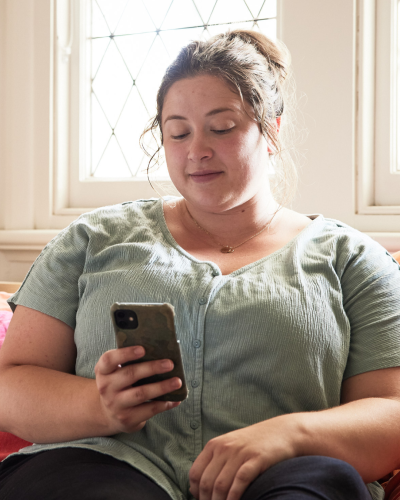
Advice and support for new parents with ADHD

Often people with ADHD have many strengths to help them manage the demands of early parenthood, including adaptability, resourcefulness, high energy and imagination, enthusiasm and creativity. 

The capacity to hyperfocus is also seen as a significant advantage, enabling deep research and informed decision-making, particularly around breastfeeding and parenting.

At the same time, the many demands can increase stress. 

Here are some tips and strategies other neurodivergent parents have found helpful.

Use organisational tools

- Use lists, calendars, timers and apps to help you remember things like appointments, medications, questions you want to ask of health professionals.

- Use visual flow charts or checklists to help with responding to your baby's needs.

- Consider taking someone with you to appointments or make notes/recordings to help you with questions or taking in the information.

Nurture your wellbeing

It can be difficult to prioritise self-care and what this looks like will be different for everyone - depending on your needs, your energy levels and any other responsibilities or demands you're managing during . 

- Some people find peer support helpful and validating, whether it's linking in with forums online or in-person groups

- Look after your sensory needs – using fidget toys can help improve your focus or channel excess energy. Ear plugs or noise cancelling headphones can be helpful to filter or reduce background noise.

- Take breaks, establish good sleeping patterns, eat nutritious food (including fruit, vegetables, wholegrains and lots of water), and try to exercise regularly.

- Practice self-compassion – be gentle on yourself. Try to not be self-critical or compare yourself with others.

"My advice would be to ask for help so that you can have a break and not to feel bad about taking time away to care for yourself. Being able to look after yourself is essential to be able to provide care for children. If you don't take time for yourself then you're less tolerant, so you end up being more sensitive to sensory stimulation and find it more challenging to regulate emotions. This can often result in you reacting to a situation in a way you don't like and end up beating yourself up for it. Time out for exercise, hobbies, even just some quiet time without someone climbing all over you can make a huge difference." Anon (COPE, 2026).

Seek help early if you need it

ADHD can impact your experience of parenthood and your mental health.

Ask for help when you need it - you don't have to struggle alone. There are neuroaffirming health professionals, many with lived experience, who can help.

Give yourself permission to seek answers. Whether that means pursuing a diagnosis, reading up on ADHD or simply talking to someone who understands

Symon

Find help and support for ADHD

Your postcode
COPE Directory Map Support Block

Renee's story of ADHD, postnatal anxiety and depression

"For the first time, the pattern of my life made sense: my emotional dysregulation, chronic overwhelm, forgetfulness, learning difficulties, masking, perfectionism, burnout, and the years of being misdiagnosed with mood disorders."

Read Renee's story
Postpartum Psychosis 3

Symon's story of motherhood and ADHD

"Thriving in a neurodivergent family often means accommodating differences, learning together, and responding with care to what your family genuinely needs.  This is a hard journey, and while it can be deeply meaningful, it is far harder to walk alone."

Finding my way through motherhood with ADHD
Real Stories Finding my way through motherhood with ADHD

Katrina's story motherhood, bipolar disorder, and neurodivergence

"Being a parent and being neurodivergent is something really special. You see the world and your child/ren differently. It’s a wild ride, but your family gets to ride this with you! How lucky are we all!"

Read Katrina's story
Katrina

Further reading and resources

  • "My ADHD makes motherhood a huge challenge, but it also gives me superpowers", by Sarah Marsh in The Guardian 

  • The podcast Australian Birth Stories features several episodes exploring neurodivergence and new parenthood.

  • ADHD Foundation Australia's free helpline is available to anyone seeking accurate information, direction, services and support. Call 1300 39 39 19 (Mon to Fri 9am to 5pm AEST).

References

  1. May et al. (2023). The Australian evidence-based clinical practice guideline for attention deficit hyperactivity disorder. Australian & New Zealand Journal of Psychiatry, 57(8), 1101–1116.https://doi.org/10.1177/00048674231166329
  2. Scoten et al. (2024). Attention-deficit/hyperactivity disorder in pregnancy and the postpartum period. American Journal of Obstetrics & Gynecology, 231(1), 19–35. https://pubmed.ncbi.nlm.nih.gov/38432409/
  3. Bang Madsen, K., Bliddal, M., Skoglund, C.B. et al. Attention-Deficit Hyperactivity Disorder (ADHD) Medication Use Trajectories Among Women in the Perinatal Period. CNS Drugs 38, 303–314 (2024). https://doi.org/10.1007/s40263-024-01076-1
  4. May, T. (2024, July 10). What is AuDHD? 5 important things to know when someone has both autism and ADHD. The Conversation. https://theconversation.com/what-is-audhd-5-important-things-to-know-when-someone-has-both-autism-and-adhd-233095
Be safe online
Dismiss Alert

Click the Exit Site button or press "Esc" on your keyboard to exit this site quickly. Click here to learn how to keep your identity safe online.

Quick exit
Hide