Trying to conceive

At COPE, we’re here for you from the very beginning. Access trusted guidance, expert information, and compassionate support as you navigate the journey of trying to conceive.

Coping with loss

Coping with loss is deeply personal and painful — COPE offers gentle support, guidance, and understanding to help you navigate this difficult time.

Pregnancy

Navigate your pregnancy with confidence using COPE’s expert advice, emotional support, and reliable information tailored for every step of the journey.

Birth

Providing you with evidence based information to help prepare and nurture yourself before, during and following birth

New parents

Early parenthood can be joyful, challenging and everything in between. COPE provides you with expert guidance and real insights to help you feel seen and supported every step of the way.

Family, Friends & Community

Whether you're a partner, friend, or family member, COPE provides guidance and support to help you care for your loved one and yourself through every stage of parenthood.

Workplace support

COPE provides guidance and resources to help workplaces support the emotional wellbeing of expecting and new parents with care and understanding.

COPE Directory

If you're going through a tough time, you're not alone. The COPE Directory is a supportive first step toward finding the right help, close to home and tailored to your needs

About us

At COPE, we believe every parent deserves access to compassionate support and reliable information. Our mission is to raise awareness, reduce stigma, and empower families facing perinatal mental health challenges.

Get involved

Your support can make a lasting impact. By donating to COPE, you help to provide vital support, resources, and research for families facing perinatal mental health challenges. Together, we can make sure no parent is alone.

Getting help

Understand when to seek help, how to take the first step of talking to someone, types of support available, plus how to find specialised perinatal mental health support near you.

Strategies to help you cope with a newborn baby

Coping with different routines and what is often a very steep learning curve can take a lot of energy. And sometimes, it's energy you simply don’t feel you have.

I wasn't emotionally prepared to be pregnant or to be having a baby, and neither was my husband. We muddled along doing all the “right” things but we were confused and lost and it wasn't a joyous time. 

Your newborn baby may or may not be the bub that you expected or imagined. For example, some babies will be very settled, while others may cry a lot – requiring great patience and commitment. This is particularly the case if your baby has health problems like colic or reflux that can cause them to be more unsettled.

New parenthood is a time when life can feel overwhelming

You may have moments in early parenthood when things feel completely out of control. It’s also very normal, particularly for first time parents, to experience fleeting doubts in your ability. Try to be kind to yourself - you're constantly learning and adapting in these first weeks. 

I thought it would be hard ... But I thought I would cope. I certainly wasn’t expecting it to be all fun and easy, but I obviously thought it would be more enjoyable. I didn’t think I would have trouble coping.

Coping with your newborn baby

Most parents find the first six to eight weeks the hardest with a newborn baby. And while people may not openly discuss many of the challenges in these early weeks of parenthood (if at all), there are a number of common hurdles you may face.

The greatest challenges commonly experienced by parents in their first weeks include:

  • Recovering from birth. This is particularly challenging if birth has been traumatic or your were highly dissatisfied with the quality of care you received.
  • Breastfeeding and bottle feeding. ⁠Feeding your baby may come easily to you. It may, however, be frustrating and challenging, and different to what you expected or hoped for.
  • Lack of sleep. Sleep-deprivation can greatly affect your mood, energy, patience and ability to think clearly.
  • Feeling highly emotional. This can be compounded by lack of sleep and having the sense that things are out of control.
  • Coping with an unsettled baby. ⁠Babies all come with unique temperaments which can place additional demands on your patience and impact your feelings towards your baby.
  • Bonding with your baby. Not all parents feel "love at first sight." ⁠For many reasons, it may take longer than you expected to develop a connection with your baby.
  • Body image. Pregnancy and birth can often change how you physically look and feel. This in turn can impact self-esteem and body image.
  • Managing priorities. ⁠Finding time for everything while also meeting the needs of your baby, might mean juggling your priorities, at least in the short-term.
  • Managing advice from others. ⁠Endless newborn and parenting advice can leave you questioning yourself and your capabilities. Trust yourself as the expert on your baby.
  • Relationship dynamics with your partner. ⁠Your relationship with your partner will also change as you adjust to life with your new arrival.
  • Relationship dynamics with your family. ⁠Not only are your expectations of parenthood likely to be adjusting, but so too are those of your family and friends. As part of this transition, you will all begin to see where and how everyone fits into the new picture.

Seeking practical and/or emotional support early can help with adjusting to parenthood

The above are some of the common challenges faced by many mothers and fathers when adjusting to parenthood.

Often, however, new parents don’t seek practical and/or emotional help early, and their impact can build up over time. This can place you, your partner and your baby under even greater stress.

You don't have to cope alone. Support is available to help you on your transition to parenthood.

Coping with a messy house

Leaving the washing to pile up and being told not to stress about a toy-strewn living room is advice often given to new parents.  But for many exhausted mums and dads, a messy house can be anxiety-provoking and make it difficult to enjoy your baby and other children.

Mums are told not to worry about mess, but it’s easier said than done. My brain just doesn’t relax in a messy house. If my environment is tidy my mental state feels clear too

This is often compounded by the fact that a new baby coincides with visits from family and friends and having more people through the house than usual.

More strategies to help you adjust to parenthood

If being told, “Don’t worry about the mess!” isn’t working, you’re not alone! Here are some other strategies that may help with adjusting to parenthood. 

  • Ask for help when visitors come over, even if it’s just getting them to pop on a load of washing.
  • Have friends or family pay for a cleaner – even just once. This can make for a great baby shower gift. Don’t be afraid to suggest it when people ask what you need.
  • Set aside 15 minutes at the end of the day to do a pick-up of toys/clutter. It will make you feel better in the morning!
  • Break things down into smaller tasks. Don’t try to tackle everything at once. Instead, try to break things down, like tidying just one area at a time. You won’t get through it all but that’s okay. Take one step at a time.
  • Be mindful that what you see on social media doesn’t always reflect reality. It’s easy to remove clutter from the frame, to choose a place that’s tidy to snap a photo and to present the image that everything’s under control. But remember, most mums are struggling to keep things clean and tidy. Just like you.
  • Try to be kind to yourself. A messy house doesn’t mean you’re a bad mum, or that you’re failing at motherhood. You're likely to be directing your attention to where it matters most – the needs of your newborn baby.

Stay supported and feel reassured in early parenthood

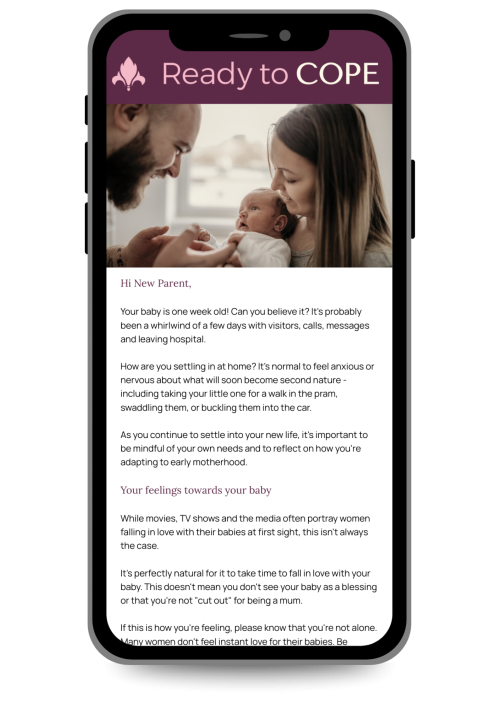
Sign up to Ready to COPE to help with adjusting to parenthood.

Get timely, supportive advice and reassurance throughout your first year of parenthood.

Sign up now
Ready to COPE guide new parents
Be safe online
Dismiss Alert

Click the Exit Site button or press "Esc" on your keyboard to exit this site quickly. Click here to learn how to keep your identity safe online.
Quick exit
Hide