Trying to conceive

At COPE, we’re here for you from the very beginning. Access trusted guidance, expert information, and compassionate support as you navigate the journey of trying to conceive.

Coping with loss

Coping with loss is deeply personal and painful — COPE offers gentle support, guidance, and understanding to help you navigate this difficult time.

Pregnancy

Navigate your pregnancy with confidence using COPE’s expert advice, emotional support, and reliable information tailored for every step of the journey.

Birth

Providing you with evidence based information to help prepare and nurture yourself before, during and following birth

New parents

Early parenthood can be joyful, challenging and everything in between. COPE provides you with expert guidance and real insights to help you feel seen and supported every step of the way.

Family, Friends & Community

Whether you're a partner, friend, or family member, COPE provides guidance and support to help you care for your loved one and yourself through every stage of parenthood.

Workplace support

COPE provides guidance and resources to help workplaces support the emotional wellbeing of expecting and new parents with care and understanding.

COPE Directory

If you're going through a tough time, you're not alone. The COPE Directory is a supportive first step toward finding the right help, close to home and tailored to your needs

About us

At COPE, we believe every parent deserves access to compassionate support and reliable information. Our mission is to raise awareness, reduce stigma, and empower families facing perinatal mental health challenges.

Get involved

Your support can make a lasting impact. By donating to COPE, you help to provide vital support, resources, and research for families facing perinatal mental health challenges. Together, we can make sure no parent is alone.

Getting help

Understand when to seek help, how to take the first step of talking to someone, types of support available, plus how to find specialised perinatal mental health support near you.

What is gender disappointment?

Experiencing feelings of sadness or grief after learning the sex of your baby, (also known as gender disappointment) is common. Both parents can experience it - and it's nothing to be ashamed of. 

You may feel disappointed for various reasons - internally longing to have a boy or a girl, already having a child or children of the same gender or because of cultural/family pressures or expectations. For some families, it's the loss of a sibling relationship.

I didn't mourn having a boy, but I did feel sad that my daughter wouldn't have a sister. 

Gender disappointment can also be linked to feeling concerned or anxious that you won’t be able to personally relate to a particular sex, or fear around raising/parenting a particular sex (more often boys).

Prevalence is unclear, in part due to limited research and the perceived taboo around speaking honestly. 

However, the rise of social media and online gender reveals may compound feelings of sadness grief or even jealousy. 

I found myself feeling so jealous of friends who got a "pigeon pair." I just thought that's what we'd be having too.

Gender disappointment and childhood abuse

Welcoming a baby is a time when people often reflect on their own upbringing and how they were parented.

Women who experienced abuse as a child sometimes feel anxiety upon learning they're having a boy. particularly if the abuser was a male. Often these feelings only last during pregnancy, subsiding after birth once the mother realises the innocence and fragility of a newborn baby

Alternatively, an expectant mother may equally feel anxious about having a girl. This may be linked to fear of not being able to protect them from a potential abuser. These feelings may emerge not so much in pregnancy (when the fetus is protected in the womb), but rather when the child is born and/or in infancy.  The innocence and fragility of a new baby can compound these feelings of the child’s need for protection. In turn, this can cause anxiety about the mother’s ability to provide this.

For this reason, women are commonly asked about factors known to increase their risk of developing mental health issues. Similarly, they are also commonly assessed if they are currently experiencing  symptoms of depression and/or anxiety. This usually includes asking about their previous experiences of abuse so that concerns can be identified and help sought to manage them.

If this resonates for you, it might be helpful to seek professional support. You don't have to suffer in silence.

I had a really complicated relationship with my mother so I was really anxious and upset when I found out we were having a girl.

Jodie

Navigating feelings of gender disappointment

It is important to acknowledge your feelings - whatever they may be. Your distress is real and you don't have to suffer alone. Allow yourself to feel grief and sadness and try not to be too harsh on yourself. Many others have felt this way, too.

It can be helpful to reflect on what the causes of the disappointment may be. Research has shown that for many parents, the sadness is around feeling they might miss out on particular activities, relationships or experiences they may associate with a particular gender. 

I had all these visions of getting manicures and going shopping with my daughter. I still feel some sadness when I see my friends doing things like this with their girls.

Remember though, your child will have their own interests and personality that won't necessarily align with gender stereotypes.

Experiencing gender disappointment does not mean that you will not love, or be able to love your baby. In fact, these feelings often disappear after the baby is born and you hold in them in your arms. Acceptance often involves experiencing grief and disappointment. This is natural and understandable – even if not commonly spoken about.

I tried to speak to a friend about how I was feeling and she said, "you should be grateful to be having a healthy baby." That just made me feel even more guilty.

Elizabeth Olds

Stay supported and feel reassured

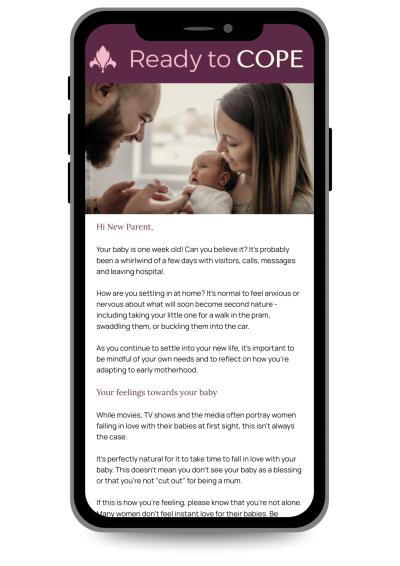
Now is a great time to sign up to Ready to COPE. 

This free, weekly email guide will help you stay informed and feel reassured during your first year of parenthood, and is available for mums, dads, and non-birthing parents.

Ready to COPE guide new parents

Getting help and support

Acceptance of your baby’s sex and overcoming the feelings of grief and disappointment usually pass with time and understanding. Talking with someone you trust and who you feel will not be judgmental can also help you to gain support and understanding.

If, however, you are finding that you are not coping with these feelings, and they are impacting on your feelings towards your baby, talking to a health professional can help. 

Learn more

Find local help and support for gender disappointment.

Your postcode
COPE Directory Map Support Block

Other uncomfortable feelings and expectations

Newborn baby and adjusting to parenthood

Be safe online
Dismiss Alert

Click the Exit Site button or press "Esc" on your keyboard to exit this site quickly. Click here to learn how to keep your identity safe online.

Quick exit
Hide