Bonding isn't always instant - it can take some time.
Getting help
COPE is here to help you navigate to timely, appropriate help
At COPE, we’re here for you from the very beginning. Access trusted guidance, expert information, and compassionate support as you navigate the journey of trying to conceive.
Coping with loss is deeply personal and painful — COPE offers gentle support, guidance, and understanding to help you navigate this difficult time.
Navigate your pregnancy with confidence using COPE’s expert advice, emotional support, and reliable information tailored for every step of the journey.
Providing you with evidence based information to help prepare and nurture yourself before, during and following birth
Early parenthood can be joyful, challenging and everything in between. COPE provides you with expert guidance and real insights to help you feel seen and supported every step of the way.
Whether you're a partner, friend, or family member, COPE provides guidance and support to help you care for your loved one and yourself through every stage of parenthood.
COPE provides guidance and resources to help workplaces support the emotional wellbeing of expecting and new parents with care and understanding.
COPE offers tools, training, and resources to support health professionals in providing compassionate, evidence-based care to expecting and new parents.
If you're going through a tough time, you're not alone. The COPE Directory is a supportive first step toward finding the right help, close to home and tailored to your needs
At COPE, we believe every parent deserves access to compassionate support and reliable information. Our mission is to raise awareness, reduce stigma, and empower families facing perinatal mental health challenges.
Your support can make a lasting impact. By donating to COPE, you help to provide vital support, resources, and research for families facing perinatal mental health challenges. Together, we can make sure no parent is alone.
Understand when to seek help, how to take the first step of talking to someone, types of support available, plus how to find specialised perinatal mental health support near you.
Bonding isn't always instant - it can take some time.

For some parents, having a baby marks the time when all their hopes and dreams have come true. You may feel an overwhelming and instant sense of love for your baby, and find yourself constantly watching, holding and touching them. Many fathers particularly describe feeling great pride, wonder and protectiveness towards their baby.
That instant "rush of love", however, doesn't happen for everyone, despite images you may have seen in the media. For many reasons, (for example, experiencing a traumatic birth or your child arriving early), it may take some time to develop a connection with your baby. You're not alone if this is your experience.
I was unprepared for the numb, lack of bonding I felt. I was not depressed … I just didn’t bond with my baby at all for the first two months. No one had mentioned that I may feel that way.
Ariane BeestonIf you’re struggling with how you’re 'supposed' to feel, know that you’re doing everything you need to be. You’re responding to your baby when they cry. You’re feeding them and changing them and speaking to them. Relationships can take time to grow, and this one might too. But the love will arrive.
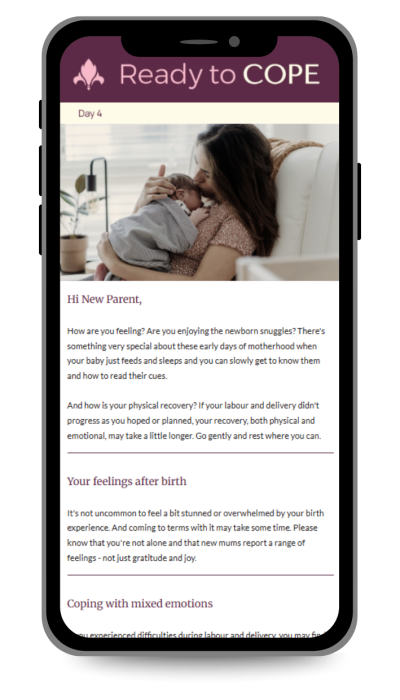
Now is a great time to sign up to Ready to COPE.
This free, weekly guide will help you stay informed and feel reassured during your first year of parenthood, and is available for mums, dads, and non-birthing parents.
Your attachment with your baby is important for your relationship – and also your baby’s development.
Research tells us that a secure attachment relationship helps to build the foundation for your baby’s positive sense of self, feeling safe, and developing the capacity to cope with distress.
Babies form attachments to significant carers in their lives, usually their parents, but also with other people such as their siblings, grandparents, other relatives and those paid to provide childcare.
Attachment research suggests a baby’s early positive experience with their parents and carers enables them to use their relationship as a ‘secure base’ from which to explore the world. This secure base also provides your baby with a foundation for secure attachment in their future relationships. In turn this also has a positive effect on their ability to explore, grow and develop.
Some ways to help develop a secure attachment include:
A relationship is a two-way street. Go gently with yourself as you develop and nurture your bond in the first few months.
If you feel concerned about your bond with your baby, you can seek professional help.
COPE is here to help you navigate to timely, appropriate help

Newborn baby and adjusting to parenthood
Some women find that they cry more easily after having a baby, and describe feeling anxious, irritable and emotional.
Postnatal or postpartum rage may be experienced in the months following birth and in the early years of parenthood
New parents often try to hide from others that they may be struggling to cope, due to feelings of failure, shame, or for fear of judgement from others.
Learn about gender disappointment, why it may occur and how to get support if you experience feelings or disappointment about your baby's sex.
Adjusting to how your postpartum body looks and feels can take some time and also require some levels of self acceptance.
Intrusive thoughts, otherwise known as scary thoughts, are unwanted negative thoughts and mental images.

Click the Exit Site button or press "Esc" on your keyboard to exit this site quickly. Click here to learn how to keep your identity safe online.