Trying to conceive

At COPE, we’re here for you from the very beginning. Access trusted guidance, expert information, and compassionate support as you navigate the journey of trying to conceive.

Coping with loss

Coping with loss is deeply personal and painful — COPE offers gentle support, guidance, and understanding to help you navigate this difficult time.

Pregnancy

Navigate your pregnancy with confidence using COPE’s expert advice, emotional support, and reliable information tailored for every step of the journey.

Birth

Providing you with evidence based information to help prepare and nurture yourself before, during and following birth

New parents

Early parenthood can be joyful, challenging and everything in between. COPE provides you with expert guidance and real insights to help you feel seen and supported every step of the way.

Family, Friends & Community

Whether you're a partner, friend, or family member, COPE provides guidance and support to help you care for your loved one and yourself through every stage of parenthood.

Workplace support

COPE provides guidance and resources to help workplaces support the emotional wellbeing of expecting and new parents with care and understanding.

COPE Directory

If you're going through a tough time, you're not alone. The COPE Directory is a supportive first step toward finding the right help, close to home and tailored to your needs

About us

At COPE, we believe every parent deserves access to compassionate support and reliable information. Our mission is to raise awareness, reduce stigma, and empower families facing perinatal mental health challenges.

Get involved

Your support can make a lasting impact. By donating to COPE, you help to provide vital support, resources, and research for families facing perinatal mental health challenges. Together, we can make sure no parent is alone.

Getting help

Understand when to seek help, how to take the first step of talking to someone, types of support available, plus how to find specialised perinatal mental health support near you.

Stress, or a postnatal mental health condition? 

For many reasons, the journey into parenthood can bring joy and fulfilment, along with stress and upheaval.  It can be an emotional time for everyone as you constantly try to adapt to the needs of your new expanding family.  

Sometimes it can be difficult to know when things have crossed the line. What we think is stress may be signs of postnatal mental health conditions in early parenthood like depression, anxiety or other mental health problems.

My husband would come home, and I would still be in wandering around in my nightie. We got a nanny and I still couldn’t get anything done – it was all too hard to face.

Mental health problems increase in the perinatal period

We know that these mental health conditions are most commonly experienced in the months following a baby. In fact, women are more likely to develop mental health problems at this time more than at any other stage of their life.  

Men are also at risk of developing mental health problems, particularly if their partner is suffering.

Postnatal mental health conditions in early parenthood 4 c

Learn more

Common postnatal mental health risk factors

  • Experiencing mental health problems in the past or currently
  • Experiencing past or current physical, sexual or psychological abuse
  • Abuse of drugs and/or alcohol
  • Having stressful situations or factors (stressors) in your life recently (e.g. special care needs of infant, moving house)
  • Poor quality of your attachment with your own mother
  • Your access to practical and emotional support
  • Having a traumatic birth experience
  • Having an unsettled baby or baby that is not feeding well
  • Not having a positive parenting experience
  • Having an anxious or perfectionist personality.

As these are known risk factors, your health professional may ask you about these factors as a routine part of your care.

Just because you may have or are currently experiencing one or more of these factors does not necessarily mean that you will develop emotional or mental health problems in the postnatal period.

However, these factors can increase your risk of this occurring, so being aware and understanding the potential impact of these factors is important. 

If possible, talk to someone about these factors if you feel that this may help your feelings towards yourself, your partner and/or your baby.

Understanding different types of postnatal mental health conditions in early parenthood

As well as knowing what may place a person at greater risk, it is also helpful to understand what mental health conditions can occur and the range of different symptoms that can develop.

Being informed, aware and knowing what to look for means you will be best placed to seek help early. 

Managing stress and parenthood is difficult enough without also battling with a mental health condition. So, the faster you seek help, the faster you can recover, improve your quality of life and enjoy your experience as a parent.

Postnatal mental health fact sheets for women and their families

Free, downloadable fact sheets for postnatal anxiety, postnatal depression, postpartum psychosis, schizophrenia, bipolar disorder and borderline personality disorder in the postnatal period.

View fact sheets
Mental health problems increase in the perinatal period

What is normal?

Having a baby is a time of huge adjustment. Your sleep, lifestyle and priorities are all impacted all at once. With so much change it can sometimes be hard to know whether how you might be feeling is part of adjusting to life with a new baby, or a sign that something is not quite right.

It is normal to feel emotional, frustrated and stressed at times. It is also quite understandable to have some concerns about the baby, how you will cope with the new demands and responsibilities. Sometimes, just getting through the day can be a challenge in itself.

However, if you are feeling sad, have lost interest or enjoyment in things that you once enjoyed or find yourself worrying over things to the point that it is causing you to feel distressed, this could be a sign of postnatal depression or anxiety.
 

I did not realise until I looked back that I had been feeling abnormally anxious over the first year of my daughter’s life. I also had episodes of feeling teary, down and wanting to escape. I think I put a lot of pressure on my partner.

Common symptoms of postnatal mental health conditions

Sleep disturbance

It is perfectly understandable that your sleep is affected as you are responding to the sleeping, settling and feeding demands of your baby. However, sleep disturbance – which includes both not being able to sleep and wanting to sleep constantly – can be a sign of a mental health condition like antenatal depression and/or anxiety.

Ongoing lack of sleep can negatively impact your emotional wellbeing or increase your risk of developing a mental health condition. It can also worsen any conditions that you may already be experiencing.

Changes in appetite

Another common symptom of a mental health condition that often feels like a physical symptom is changes in appetite. This includes eating less or being disinterested in food. On the other end of the scale, this can also include using food as a source of comfort and, therefore, eating significantly more than before pregnancy.

Good nutrition is especially important for you, so that you can be strong and provide for your baby (whether you are breast-feeding or not). While your appetite may increase a little if you are breastfeeding, it should not change too dramatically.

So, if you are finding that your appetite has changed drastically, it can be a symptom that something may not be fully right with your mental health.
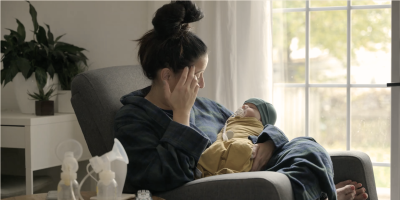
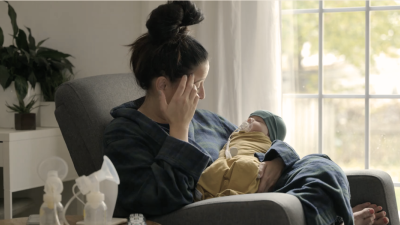
Ongoing stress leading to distress

It is quite normal to be aware of your baby and be concerned for their health. However, if you are constantly feeling nervous, having anxious thoughts or worrying that something is wrong or will go wrong, it may be an indication of antenatal anxiety.

Too often these symptoms are ignored or attributed to the baby blues (especially earlier in the postnatal period) or general stress about having a baby. This is not always the case. If these types of thoughts and feelings continue for over two weeks, increase in frequency, and begin to impact your quality of life or your ability to enjoy life with your baby, you should not ignore them. 

These worrying thoughts or feelings may be a sign of postnatal anxiety, a condition that can be effectively managed and treated.

Frequent ups and downs

If you find yourself experiencing ongoing mood swings that last for two months or more, this is not something to be dismissed as hormonal changes or adjusting to your role as a mother. 

Rather, it could be a symptom of postnatal depression and you should speak to your health professional about it.

Something not quite right? Check it out early!

If you are experiencing any of the above symptoms in a way that is ongoing and impacting on your ability to carry out everyday activities, it could be a sign that something is not quite right.

It can be tempting to ignore these symptoms, attribute them to adjusting to life with a new baby, or simply try to ride them out.  But doing so will prevent you from identifying if something is not quite right and from managing these symptoms with help from a health professional. Moreover, failure to get help early can lead to your symptoms worsening over time.

Instead, try to pay attention to how you are feeling, the symptoms you are experiencing and how long you have been feeling this way. Bring this information to your health professional who can best assess if you are possibly experiencing the symptoms of a mental health condition.

The Mum Drum: Living with Depression & Anxiety

In this episode The Mum Drum, our YouTube and podcast series, Stevie and Renee discuss living with anxiety and depression, how their friendship helped them through it all.

Find local help and support for postnatal mental health conditions in early parenthood

Your postcode
COPE Directory Map Support Block
Be safe online
Dismiss Alert

Click the Exit Site button or press "Esc" on your keyboard to exit this site quickly. Click here to learn how to keep your identity safe online.

Quick exit
Hide