Trying to conceive

At COPE, we’re here for you from the very beginning. Access trusted guidance, expert information, and compassionate support as you navigate the journey of trying to conceive.

Coping with loss

Coping with loss is deeply personal and painful — COPE offers gentle support, guidance, and understanding to help you navigate this difficult time.

Pregnancy

Navigate your pregnancy with confidence using COPE’s expert advice, emotional support, and reliable information tailored for every step of the journey.

Birth

Providing you with evidence based information to help prepare and nurture yourself before, during and following birth

New parents

Early parenthood can be joyful, challenging and everything in between. COPE provides you with expert guidance and real insights to help you feel seen and supported every step of the way.

Family, Friends & Community

Whether you're a partner, friend, or family member, COPE provides guidance and support to help you care for your loved one and yourself through every stage of parenthood.

Workplace support

COPE provides guidance and resources to help workplaces support the emotional wellbeing of expecting and new parents with care and understanding.

COPE Directory

If you're going through a tough time, you're not alone. The COPE Directory is a supportive first step toward finding the right help, close to home and tailored to your needs

About us

At COPE, we believe every parent deserves access to compassionate support and reliable information. Our mission is to raise awareness, reduce stigma, and empower families facing perinatal mental health challenges.

Get involved

Your support can make a lasting impact. By donating to COPE, you help to provide vital support, resources, and research for families facing perinatal mental health challenges. Together, we can make sure no parent is alone.

Getting help

Understand when to seek help, how to take the first step of talking to someone, types of support available, plus how to find specialised perinatal mental health support near you.

Biological and psychological perinatal mental health risk factors

In addition to the challenges you may face as you adjust to life with your new baby, there are also a range of factors that can make some women more vulnerable to emotional and mental health conditions in the first year after birth.

These include a range of genetic and biological factors as well as your upbringing and the way you have learned to think, feel and behave in situations (also known as psychological factors).

Common postnatal mental health risk factors
Experiencing mental health problems in the past or currently
Common postnatal mental health risk factors
Experiencing past or current physical, sexual or psychological abuse
Common postnatal mental health risk factors
Abuse of drugs and/or alcohol
Common postnatal mental health risk factors
Having stressful situations or factors (stressors) in your life recently (e.g. special care needs of infant, moving house)
Common postnatal mental health risk factors
Poor quality of your attachment with your own mother
Common postnatal mental health risk factors
Your access to practical and emotional support
Common postnatal mental health risk factors
Having a traumatic birth experience
Common postnatal mental health risk factors
Having an unsettled baby or baby that is not feeding well
Common postnatal mental health risk factors
Not having a positive parenting experience
Common postnatal mental health risk factors
Having an anxious or perfectionist personality
Common postnatal mental health risk factors
Neurodivergence

Your health professional may ask you about these factors as a routine part of your care. 

Just because you may have or are currently experiencing one or more of these factors, it does not necessarily mean you will develop emotional or mental health problems in the postnatal period.

Given these factors can increase your risk, however, being aware and understanding the potential impact is important.

Learn more about these risk factors

When I had my baby, almost as soon as she was safely out, the medical experts around me were urging me to sleep.

A nurse was assigned to feed her and the midwife team taped handwritten signs across my door: “Do not disturb this patient” and “This patient must sleep”.

I had a 95% chance of entering postpartum psychosis, and nobody wanted that.

Eleanor de Jong
Postnatal mental health conditions in early parenthood 4 c

Planning for postpartum if you're at risk of a mental health condition

There are a number of steps you can take to proactively prepare for early parenthood if you've identified that you might be at risk. 

  • Discuss your mental health history early with your healthcare provider so they are best placed to support you.
  • Consult with your treating doctor around safe use of medications if you're choosing to breastfeed.
  • Consider re-engaging with your psychologist/psychiatrist. Or seeking one with perinatal expertise via the COPE Directory.
  • Let loved ones know about early warning signs and symptoms, plus how they might be able to advocate for you if required.
  • If you have a partner, speak to them now about what support you might need after your baby arrives. If you have a history of mental ill-health, particularly bipolar disorder, protecting your sleep is paramount.
  • Start building your village now. Who are the friends and family you can call on for support and what help might you need.
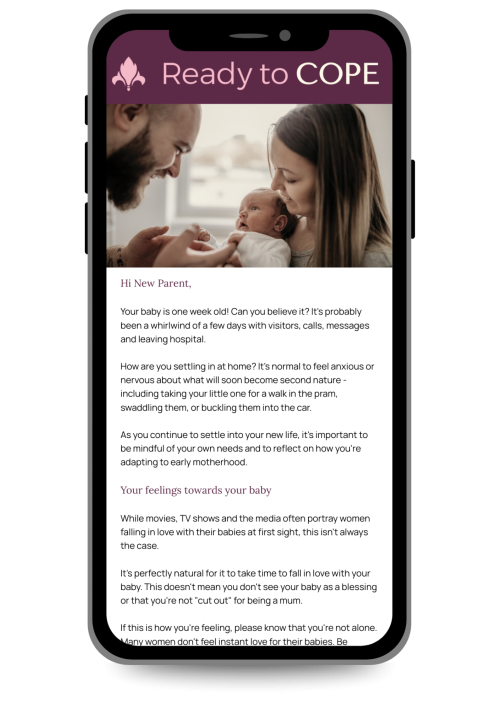
  • Receive weekly updates to support your emotional and mental wellbeing with our free Ready to COPE guide.
  • Complete COPE's health and wellbeing self-checks for stress, anxiety and depression to keep an eye on how you're travelling.
  • Access our fact sheets for Borderline Personality Disorder, Bipolar Disorder, Schizophrenia and Neurodivergence in the perinatal period for specific recommendations.
  • Try not put too much pressure on yourself. It's okay - crucial, even - to lower your standards around housework for a little while and to have clear boundaries around what you need to stay well. Gently reflect on expectations you might have of early parenthood to ensure you're realistic about any challenges you may face.

Stay supported and feel reassured in early parenthood

Sign up to Ready to COPE to help with adjusting to parenthood.

Get timely, supportive advice and reassurance throughout your first year of parenthood.

Sign up now
Ready to COPE guide new parents

Learn more about planning postpartum when at risk

Find help and support for postnatal mental health conditions

Your postcode
COPE Directory Map Support Block

Postnatal mental health fact sheets for women and their families

Free, downloadable fact sheets for postnatal anxiety, postnatal depression, postpartum psychosis, schizophrenia, bipolar disorder and borderline personality disorder in the postnatal period.

View fact sheets
Mental health problems increase in the perinatal period
Be safe online
Dismiss Alert

Click the Exit Site button or press "Esc" on your keyboard to exit this site quickly. Click here to learn how to keep your identity safe online.

Quick exit
Hide