Eating disorders in the postnatal period, links to increased risks of anxiety and depression, plus where to find help.
Download Eating Disorders in Early Parenthood fact sheet
A guide for women and their families
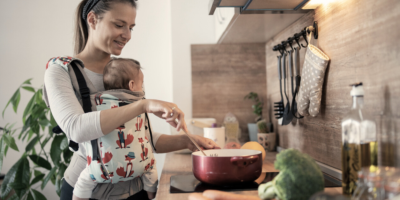
Many women struggle with the changes to their body after giving birth. It’s normal and understandable, particularly as you recover and heal. New mothers often describe feeling shocked, embarrassed and anxious as they adjust to weight gain, stretch marks and loose skin post-pregnancy.
Unfortunately, these feelings can be compounded by societal pressure to “bounce back” and social media images of celebrities and influencers appearing to lose weight effortlessly. (Don’t forget that in reality, they often have the help of chefs, personal trainers and Instagram filters!)
I couldn’t look at myself in the mirror after having my baby. I hated my body.
Changes in body image can be challenging for people with a history of eating disorders.
While pregnancy may lead to improvements in eating disorder behaviours, in the months following birth, parents are more likely to report being unhappy with their body shape and weight. This can happen to people of all body shapes and sizes.
Higher levels of distress are also reported by some people in the months following birth. This can be regarding the changes to their body from pre-pregnancy, missing their pregnancy identity, the feeling of lost ownership, agency or control of your body, and/or general challenges with early parenthood. These factors can all result in increased risk of relapse at this time.
I swear to god, I had like a countdown to when she was born, and I didn’t have to eat anymore.
Breastfeeding left me gaunt and thin which only stirred old habits. I was so busy with the baby that I often just forgot to eat. When people said, “You don’t look like you’ve had a baby,” it reinforced my old eating behaviours. I was feeding my baby – and starving myself at the same time.
Eating disorders have been associated with increased risk of anxiety and depression both during pregnancy and in the year following birth.
This is why it is important that your health team know your eating disorder experience and how your mental health is tracking during your pregnancy and early parenting journey.
I chose not to breastfeed because I wanted to get back to my pre-pregnancy weight. I still feel guilty about it.
Research has indicated that parents with current or a history of eating disorders may need additional support with feeding the baby and eating.
A Child and Family Nurse or Lactation Consultant may be able to assist with specific feeding challenges, including fuelling your own body or managing specific difficulties with body positioning.
A Credentialed Eating Disorder Clinician can provide additional support when these challenges bring up body image concerns or worries about food.
Talking therapies can be very helpful for some people in managing eating disorders and related mental health concerns, such as anxiety and depression.
A mental health professional can work with you to find the therapeutic approach that works for you. This might include Cognitive Behaviour Therapy, Acceptance and Commitment Therapy, InterpersonalTherapy or other approaches.
Medicines such as a class of antidepressants known as SSRIs which are safe to use during breastfeeding, may be helpful to manage depression or anxiety that you may be experiencing alongside the eating disorder. This can make it easier to focus on therapy.
Some medications are approved in Australia for the treatment of Binge Eating Disorder but should only be prescribed in certain circumstances.
As with all medications, it is important to speak with your health professional, and together weigh up the risks of the medication with the risks of untreated or not adequately treated eating disorders - particularly if you are breastfeeding.
Eating nutritious foods and staying hydrated will help give your brain and body what they need to get you and your baby through pregnancy and early parenthood.
When possible, choose fruit, vegetables, wholegrains and energy sources such as lean meat, chicken, fish, eggs, nuts, seeds and plant oils.
Also, be flexible with your food and kind to yourself about the choices that you make – you are doing hard things and ‘good enough’ nutrition is good enough.
It is helpful to let your health professional know about your history with eating disorders, so they can better understand your needs and work with you to provide appropriate support and reassurance.
Many women with eating disorders suffer in silence due to the stigma that still exists around these conditions. It’s important to know that if you’re struggling with eating, purging, excessive exercise or other behaviours linked to eating disorders after having a baby, you’re not alone.
Help is available. And while it’s not always easy to speak honestly and openly about how you’re feeling, it’s incredibly brave to take the first step.
You can find support for body image concerns and/or eating disorders by searching the COPE directory.
A guide for women and their families
The estimated prevalence of eating disorders during pregnancy is around 7.5%. Feelings of guilt and shame can prevent women seeking help.
Adjusting to how your postpartum body looks and feels can take some time and also require some levels of self acceptance.
Types of postnatal mental health conditions, their signs or indicators, plus what to do if you feel you may be experiencing symptoms.
If you have ongoing thoughts and feelings of worry and tension that are hard to live with, then you may be experiencing postnatal anxiety.
Postnatal depression is a common but debilitating condition that affects one in seven women following the birth of their baby.
Postpartum psychosis, also referred to as postnatal psychosis or puerperal psychosis, affects 1-2 in every 1000 mums.
Bipolar disorder is a serious mental health condition. Those with a history may have a relapse of bipolar disorder in the postnatal period.
Signs and symptoms, treatment, management, and additional support for schizophrenia in the postnatal period.
Living with borderline personality disorder can be challenging. Having a baby makes things more difficult - that's why it's important to get help.
Post traumatic stress disorder (PTSD) following birth can develop if you have personally experienced or witnessed a traumatic birth event.
Intrusive thoughts, otherwise known as “scary thoughts”, are unwanted negative thoughts and mental images.
COPE is committed to providing high-quality perinatal mental health information and has developed a series of postnatal mental health fact sheets for women and their families.
Click the Exit Site button or press "Esc" on your keyboard to exit this site quickly. Click here to learn how to keep your identity safe online.
